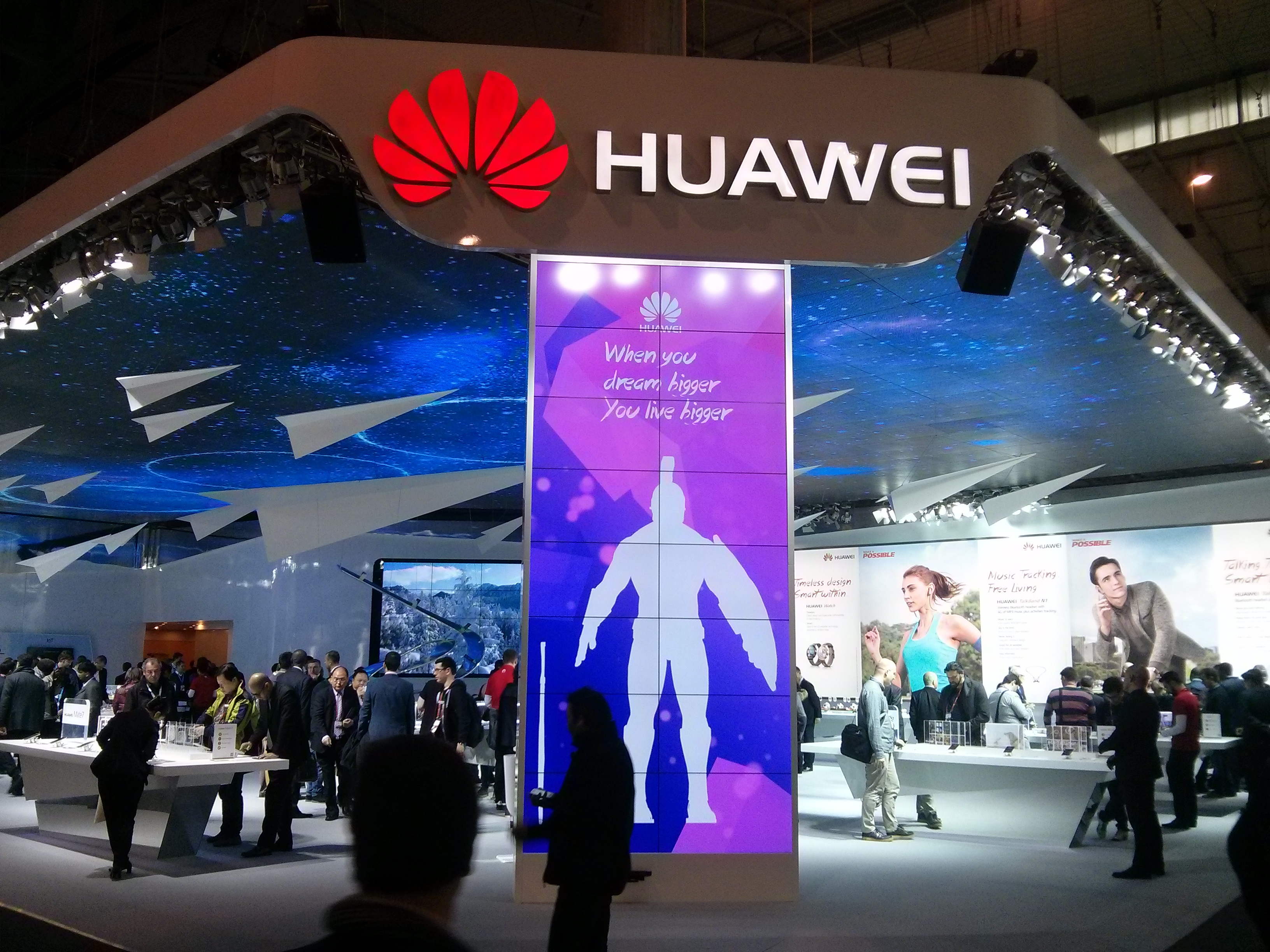
Bottom line: Huawei’s move into the US smartphone market looks like a logical and necessary step to consolidating its place as a top global brand, but will require years of major investment to succeed.
Huawei to sell smartphones in US
Riding high on strong momentum from the second half of 2015, smartphone maker Huaweiis aiming to fill the last major black hole in its global footprint by entering the US. The new campaign carries special significance for Huawei, since the company was banned from selling its older networking equipment in the US several years back due to national security concerns from Washington.
The move into the US was just one of many topics that Huawei executives discussed at CES, the world’s biggest consumer electronics show taking place this week in Las Vegas. But it was the move the attracted the most attention due to Huawei’s past frustrations with one of the world’s biggest markets for both networking equipment and smartphones. Read Full Post…
Bottom line: ZTE’s new Suning tie-up presages an aggressive push into the China smartphone market this year, potentially helping it reach an aggressive target for 20 percent annual revenue growth over the next 5 years.
Suning buys into Nubia
Following a painful restructuring that wrapped up more than a year ago, telecoms stalwart ZTE (HKEx: 763; Shenzhen: 0000063) is heading into the New Year with a major new partnership with retailing giant Suning (Shenzhen: 000063), and a medium-term revenue target that looks quite aggressive. The signals reflect a new level of confidence at ZTE, which has returned to the profit column and is aggressively building up its smartphone business as a key plank for its future growth.
The smartphone business lies at the heart of the new tie up with Suning, which is buying a major stake in ZTE’s separately-run upscale Nubia brand. The bigger picture has a top ZTE official forecasting the company’s revenue will hit 200 billion yuan ($31 billion) by 2020, a 150 percent increase over 2014 levels. Read Full Post…
It’s official: the fast-rising Huawei has formally passed the 100 million mark for smartphone sales this year, cementing its place as the world’s undisputed third largest player behind only Apple (Nasdaq: AAPL) and Samsung (Seoul: 005930). In a relatively unusual move for this low-profile company, Huawei is also trumpeting the milestone in a formal press release and forecasting more strong growth for next year.
Huawei has been China’s biggest success story to date in the young smartphone space, gaining rapid momentum over a crowded field of domestic rivals that includes Lenovo (HKEx: 992), ZTE (HKEx: 763; Shenzhen: 000063) and smaller names like Alibaba-backed Meizu. But the company should also carefully watch the case of the stumbling Xiaomi, which was being called a homegrown Chinese version of Apple before it began its recent rapid fall from grace. Read Full Post…
Bottom line: OnePlus and Smartisan are 2 brands that could be most at risk for closure or acquisition in a looming smartphone shakeup that will intensify next year and claim at least 2-3 mid-sized and smaller players.
Less than 2 weeks after he talked about a looming shakeup in China’s overheated smartphone sector, OnePlus co-founder Carl Pei is having to explain layoffs at his company, and also fend off rumors of a takeover bid. At the same time, more signs of Pei’s predicted shakeup are coming from Smartisan, another newer smartphone play, whose manufacturing partner for its new model has reportedly gone bankrupt.
Both OnePlus and Smartisan fit the profile of the kind of company that Pei said would be most at risk in the coming shakeup. Each is relatively young, and both are pure smartphone plays without any other operating history. That means they have few other resources to fall back on as their profits evaporate in the unending price wars gripping China’s smartphone market. Read Full Post…
Bottom line: Huawei’s smartphone unit is finishing 2015 on a solid note, meeting its annual targets a month early, while Xiaomi will need to show better overseas performance next year to regain some of its fading momentum.
Huawei meets smartphone targets early
A flurry of new numbers are coming from the smartphone space as we head into year end, reflecting the different focuses of domestic leaders Huawei and Xioami. When the history books are written, 2015 will be remembered as the year when Huawei surged to become the world’s third biggest smartphone brand behind only Apple (Nasdaq: AAPL) and Samsung (Seoul: 005930), and also the clear Chinese leader. But for Xiaomi, 2015 could be a year the company would rather forget, as it lost momentum in its home China market due to stiff competition and saw slow progress in its overseas expansion.
The latest headlines have Huawei forecasting its overall revenue will surpass the $60 billion mark this year, equating to a rise of 29 percent or higher from last year’s $46.5 billion. That would mark a nice acceleration from the previous year’s 20.6 percent revenue growth, with much of the gains coming from the company’s rapidly growing smartphone division. Read Full Post…
Bottom line: New comments from OnePlus are the latest sign of a shakeout set to hit China’s smartphone sector in 2016, with at least 3-4 small to mid-sized brands likely to close up shop by the end of next year.
OnePlus trims product line
The latest signs of trouble in the overheated smartphone space are coming from newcomer OnePlus, which is detailing its own missteps and predicting a much-needed industry shakeout will intensify soon. The comments from OnePlus co-founder Carl Pei are some of the most direct I’ve seen so far about the industry’s current woes, though he’s careful to avoid any implication that OnePlus itself might fall victim of the shakeout he’s predicting.
The fact of the matter is that OnePlus is exactly the kind of player that’s likely to go belly up in the looming shakedown, and Pei’s description of his current situation paints a rather bleak picture for his company. Equally intriguing is Pei’s prediction that one or more major players may also withdraw from the space in the coming consolidation. Read Full Post…
Bottom line: The latest muddled comments from Lenovo founder Liu Chuanzhi could reflect his growing frustration with CEO Yang Yuanqing, who could be forced out in the next year if the company’s performance doesn’t improve.
Lenovo’s Yang looks for new rice bowl
It’s no mystery that PC giant Lenovo (HKEx: 992) has been stumbling in the last 2 years due to bad execution in the smartphone space. But slightly more mystifying are new remarks by company founder Liu Chuanzhi on his views about his self-groomed successor and CEO Yang Yuanqing. Liu is currently chairman of Lenovo parent Legend Holdings (HKEx: 3396) and is 71, which isn’t too old. But his remarks on Yang’s performance on the sidelines of a recent event make him seem a bit muddled and also convey the conflicting feelings of loyalty and frustration that he must be feeling about his appointed successor.
Before I attempt to translate his actual remarks, we should put the Lenovo story into a bit of context to understand what Liu is saying. Yang Yuanqing is famous for building Lenovo into a global PC giant through an aggressive acquisition strategy, which began with the landmark purchase of IBM’s (NYSE: IBM) PC business in 2005 and later included other acquisitions in such diverse markets as Germany, Brazil and Japan. Read Full Post…
Bottom line: Huawei’s strong sales for its Mate line of mid-range smartphones and positive coverage of Apple’s newest China store opening spotlight 2 of this year’s top Chinese smartphone trends, which should continue into next year.
Huawei aims high with Mate 8 launch
A couple of smartphone headlines are spotlighting 2 of this year’s top trends in the market, namely the rapid rise of Huaweiand the remarkable turnaround in China for Apple(Nasdaq: AAPL). The first headline has Huawei announcing lofty targets for the latest model from its line of mid-range smartphones. The second has Beijing becoming Apple’s unofficial Asian capital, with the opening of its fifth store in the city — more than any other in Asia.
Both of these stories are quite remarkable, as each represents a major shift from previous trends in 2014. Huawei has struggled for the last few years to differentiate itself from a crowded field of domestic smartphone makers, but finally emerged as a leader this year based on its better product designs. Similarly, Apple’s recent surge marked a major turnaround from the last few years, when its reputation took a beating in China due to poor relations with Beijing. Read Full Post…
Bottom line: Alibaba’s spin-off of its C2C marketplace for second-hand goods could reflect a new trend for big Internet firms to separately run individual assets, while LeTV may have provided most of the money in the first funding round for its smartphone unit.
Taobao spins off Xianyu
A couple of fund-raising headlines are spotlighting emerging trends in China, including a nascent move by big companies to spin off smaller units as separately run and funded entities. That move was center stage in new reports that e-commerce juggernaut Alibaba(NYSE: BABA) is spinning off its Xianyu marketplace that specializes in sales of second-hand goods between consumers.
The second headline comes from online video high-flyer LeTV(Shenzhen: 300104), and spotlights a trend that shows rapidly cooling investor sentiment towards overheated sectors like video and smartphones. That news has LeTV declining to name any of the backers in the first funding round for its fledgling smartphone unit, hinting that no serious investors were interested in this particular opportunity that raised $530 million. Read Full Post…
I often use this space to spotlight news where Shanghai looks like a trendsetter, and that certainly looks like the case with a small but hopefully significant item involving the smartphones that have become an indispensable fixture of everyday life for many, myself included. This particular news has seen an entire department at a local university take the bold step of banning students from bringing their smartphones into class.
As a university teacher, I have to enthusiastically applaud the move by the School of Art, Design and Media at East China University of Science and Technology in Fengxian District. I also hope that many departments and perhaps entire universities will follow suit, and that the move could spark a broader debate about when, where and how it’s appropriate to use smartphones in a big city like Shanghai. Read Full Post…
Bottom line: Lenovo’s focus on PCs for its latest product launch is designed to divert attention from its struggling smartphones, which are likely to show more losses and weak performance in the company’s upcoming quarterly results.
Lenovo targets bargain hunters
It was just 2 years ago that Chinese tech titan Lenovo (HKEx: 992) was on top of the world, having just gained the title as the world’s biggest PC brand from Hewlett-Packard (NYSE: HPQ) and declaring that Apple (Nasdaq: AAPL) and Samsung (Seoul: 005930) were its next targets. But you don’t hear the company’s chatty chief Yang Yuanqing talking about Apple, Samsung or even smartphones that much these days, most likely because all of its efforts in that space have struggled to find an audience.
Instead, Yang was falling back on his company’s older PC business in the latest headlines, showing off a few new models from its Yoga line that can function as both laptop and tablet PCs. The only problem is that both of these types of computer are in rapid decline, as consumers increasingly flock to large-screen smartphones for simple functions like reading news and e-commerce shopping that they used to do on their PCs. Read Full Post…