I read with interest over my morning coffee that Starbucks (Nasdaq: SBUX) and prominent Hong Kong restaurant operator Maxim’s appear to be getting divorced, with the announcement that the former will take sole control of all south China Starbucks shops while the latter will take over all their Hong Kong outlets. (company announcement) I’ll have to do a quick bit of speculation here on what this all means,  as I don’t know many details about this partnership even though I’m quite familiar with the companies, which both have excellent reputations in their home markets. My quick take is that this divorce probably reflects an inability to work well together, as both companies certainly have strong ideas about running a restaurant, especially in China where the cost of a cup of coffee is quite pricey compared with local incomes. At the same time, Maxim’s has never really shown a huge interest in China for its own brands, unlike Starbucks which is building new stores like crazy and just last year announced a major commitment to support local coffee growing in Yunnan province, China’s only natural coffee growing region. So what’s it all mean and who comes out the winner? In this case it could be a win-win, as Maxim’s gets to pull out of a market for which it apparently has little taste and quickly recoup its investment. Starbucks, meantime, gets to take over its China show completely, with both its challenges and rewards. Starbucks has tasted success in China’s big cities, where its stores are usually packed with lounging young professionals relaxing over a cup of daily brew. But whether or not it can replicate that success in less affluent southern cities where its Maxim partnership were concentrated could be more challenging as it seeks out a suitable business mix for these areas.
Bottom line: Starbucks’ buy out of its long-time partner in South China could become a major growth opportunity if it can figure out how to sell pricey drinks to consumers in less affluent cities.
早上喝咖啡的时候看到一条很有意思的新闻,星巴克<SBUX.O>与香港知名餐饮品牌美心似乎正闹“离婚”,双方宣布星巴克收回中国南方所有星巴克店面的全部所有权,而所有香港店面归美心独有。此举意味着什麽我还不是很确定,因为虽然我对这两家在各自本土市场声名卓着的公司很熟悉,但双方合作的细节我并不是很了解。我的第一反应是,两公司“分家”可能反映出两家无法很好地合作,因为双方对於如何经营餐饮企业都各自有着很强烈的见解,尤其是在中国,毕竟这里一杯咖啡的价格相对於当地收入而言相当贵。同时,美心对於在中国大陆拓展自有品牌从未表现出特别大的兴趣,而星巴克正在中国疯狂建立新店面,去年还宣布将大力扶持云南的咖啡种植业。那麽这到底意味着什麽?谁才是赢家?这种情况下,它可能是一种双赢局面,因为美心可以退出自己似乎无甚兴趣的市场,并迅速回收投资。而星巴克可以完全掌控其中国业务,尽管这里是挑战与机遇并存。星巴克在中国大城市已经尝到了胜利甜头,因为那里年轻的职业人士已习惯每天用一杯醇香的星巴克咖啡来放松心情。但是星巴克能否在富裕程度稍逊一筹的那些中国南方城市复制这一成功可能会更有挑战性,毕竟它与美心的合作一直集中在这块地区。
一句话:星巴克在中国南方城市买断其店面可能会成为一个重大成长机遇,前提是它要学会在不那麽富裕的城市向消费者推销其较为昂贵的饮品。
Related postings 相关文章:
◙ Starbucks China Expansion: New Brew Needed to Serve Up Success
◙ McDonald’s Revs Up for China Drive-Thru 麦当劳寄望“得来速”汽车餐厅拓宽中国市场
◙ China’s Heavy Hand Leaves Investors Wary on YUM’s Little Sheep Buy 百胜难吞小肥羊
 their own intellectual propertyl. I don’t know a lot about Hisun, but presumably Pfizer has done its homework and feels this is a partner it can work with. If that’s the case, this kind of pairing could be just what the doctor ordered for both sides, as Chinese health officials will undoubtedly be happy to give preferable treatment to drugs from a company with both a strong domestic Chinese partner and also one with the Pfizer seal of approval, guaranteeing the quality of its products.
 After seeing its solar panel makers struggle for the better part of a year in one of their worst ever downturns, Beijing is finally stepping in to help this promising sector that has fallen on hard times. Yingli Green Energy (NYSE: YGE), one of the stronger players, has announced that it’s just received a 5-year, 1.2 billion yuan ($180 million) loan from two Chinese government-controlled banks, Bank of China and CITIC. (
 Canadian Solar, in a relatively uneven arrangement that will see GCL provide 90 percent of the registered capital. (
 without any equity participation. GCL would clearly be the dominant partner in this arrangement, with a market cap of around $8 billion compared to Canadian Solar’s much smaller $400 million. But this kind of tie-up, if successful, could lead to more similar partnerships that would provide some much-needed consolidation for an industry that is now in the midst of a downturn and faces a potential looming cash crunch. (
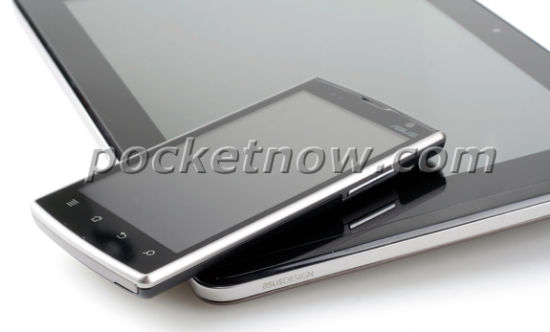 feel like carrying around a bulky tablet. Of course, with a product like this design will be key and only time will tell if consumers like it. I personally like Asustek for its willingness to take risks in new product development, which produced the wildly successful netbook at Computex several years ago. This new product is intriguing because it should appeal to the large number of consumers who want to simplify their lives by not having to carry around so many devices, adapters and so forth. Given Asustek’s record for innovation and the fact that I really think demand exists for this kind of product, I would say the Padfone could stand a strong chance for success, in which case we could see copycats piling into the market by the end of the year.
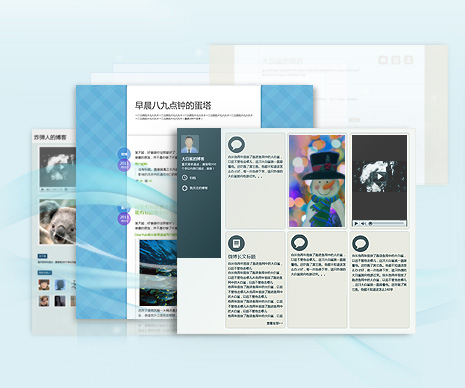 brilliant move by Sina to beef up its social networking unit by combining a Twitter-like offering in Weibo with a Facebook-like one in this new Qing service. Of course, the end goal in all this is to create a company that can ultimately generate big profits and be spun off. Weibo has already shown its early moves in this direction, announcing its first acquisition a few weeks ago after being formally spun off from its parent. (
 Chery Automobile, China’s only major car maker without a foreigner partner, is getting ready to tie the knot with Japan’s Subaru, in what looks like a smart marriage, while a separate newly announced plan for a new plant in Venezuela looks more questionable. First Subaru. After months of on-again-off-again talks, Chery and Subaru’s Japanese parent have reached an agreement in principle that would see them co-produce Subaru cars in northeastern China, foreign media are reporting. (
 their cues from Beijing, and thus is in prime position to craft its plans based on market conditions rather than Beijing-inspired dreams of becoming an instant global player. By focusing its investment banking dollars on Hong Kong, where a big chunk of the I-bank business comes from Chinese companies, Bocom is choosing an area where it can combine its own China-based connections with those of internationally-connected locally-based I-bankers to create what could become a formidable challenge to the big multinational players. Of course, only time will tell if Bocom can execute on this plan. But given its market-orientation, China connections and willingness to spend big for talent in Hong Kong, this looks like a plan with a good chance of success and one that could eventually propel Bocom to other international markets.
 restrict new car sales to ease urban congestion. Indeed, many of my friends who used to drive everywhere have done the unthinkable in recent weeks and are taking public transport, which has greatly improved in major cities these last few years. Such a major shift in sentiment from an industry that was previously expecting 10 percent growth this year underscores the fact that auto sales are no longer a priority for Beijing, which will hurt the likes of global powerhouses like General Motors (NYSE: GM) and Volkswagen (Frankfurt: VOWG), not to mention homegrown players like SAIC (Shanghai: 600104), Geely (HKEx: 165) and BYD (HKEx: 1211), which have all posted big profit gains due to strong domestic sales. Beijing will of course continue its support for alternate energy vehicles, though that slice of the market will remain tiny for at least the next few years. In the meantime, look for a rough road ahead for China’s major auto makers in the next 1-2 years.