
Retail: Suning Plays on Strength, Macy’s Timid Step  苏宁巧借实体店支持电商业务

There are a couple of interesting stories from the retail space today, one involving a shrewd new move by Suning (Shenzhen: 002024) to leverage its real-world stores in the e-commerce space, and the other involving a baby step into China by US department store giant Macy’s (NYSE: M) that looks like too little too late. Let’s look first at Suning, as that’s the most exciting news and a move that could quickly give this company an advantage over more established rivals like Alibaba and Jingdong Mall in the fast-growing e-commerce space. According to media reports, Suning, best known for its chain of 1,800 home electronics shops, plans to use that real-world store network to give consumers an easy option for quickly picking up the products they purchase online. (English article) Under the current system, most e-commerce companies use couriers to deliver their products, with most only able to make same-deliveries if the buyer lives in a major city and a purchase is made early in the day. Suning’s proposition could change that equation, as it would presumably allow buyers to purchase their items online, and then simply walk over to their nearby Suning store and pick up the item an hour or 2 later at their own convenience instead of having to wait at home for a courier. While it sounds good in theory, of course the big factor will be execution, as Suning offers far more products at its online stores than it sells at its traditional brick-and-mortar shops, meaning it will have to find a way to stock its real-world stores with many of its most popular e-commerce products. But this shouldn’t be a huge problem for a company like Suning, which has shown a strong record for executing its e-commerce strategy, propelling it in a relatively short time to one of the industry’s top 5 players. Meantime, Macy’s, one of the top US department store operators, is making its own timid move into China e-commerce, investing $15 million in a company called VIPStore, which specializes in luxury and fashion goods. (English article) As part of the deal, Macy’s private-label merchandise will be sold in China through VIPStore’s Omei.com site. This deal, which looks quite modest to me, represents a big move for Macy’s, whose main step outside the US up until now has been to open 2 stores in Dubai. From my perspective, this step looks quite conservative and reflects the stiff competition in both China’s traditional and e-commerce retail spaces that Macy’s will face from both major western and Chinese names. I do agree to some extent with the go-slow approach that Macy’s is taking, as it’s never good to rush into a strange new market like China. But at the same time, this kind of ultra-conservative approach means that Macy’s probably won’t gain any meaningful experience for at least a few years, by which time it will be so far behind its other western and Chinese rivals that its chances for success will be miniscule.

Bottom line: Suning’s leveraging of its real-world stores to boost its e-commerce business looks like a smart move that should help it steal share from bigger names like Alibaba and Jingdong Mall.

Related postings 相关文章:

China: Room for How Many Amazons? 中国电商市场到底有多大?

Alibaba’s Tianmao Takes on Electronics 天猫发力家电市场

Microsoft E-Commerce: Late to the Game Again 微软进军中国电商市场最终或以失败收场


Alibaba: Let’s Get the Roadshow Rolling  阿里巴巴:我们开始路演吧

After several years of keeping an extremely low profile, Alibaba founder and chief Jack Ma is suddenly coming back out into the open with some major interviews as the e-commerce giant gets set to embark on what could well become one of the longest roadshows for a China Internet IPO. In all fairness, an IPO may not be the only thing on Ma’s mind right now, following his company’s recent deal to purchase about half of the 40 percent of itself owned by Yahoo (Nasdaq: YHOO). Ma and Alibaba have made it known for a while that they intend to sell most or all of that reacquired stake to new investors, and various reports have appeared over the last month stating interest was coming from various investors, including sovereign wealth funds Temasek of Singapore and China’s own China Investment Corp, also known as CIC. In a strong break with the past few years, Ma himself has granted at least 2 new interviews to major media, with both Bloomberg and the Wall Street Journal featuring stories quoting the founder of China’s largest e-commerce company. (Bloomberg report; Wall Street Journal report) As a former reporter in the China Internet sector, I can recall how Ma was quite keen to do interviews in Alibaba’s early days, when he loved to say how his company and the Internet in general were leveling the playing field for small Chinese entrepreneurs. But then he largely stopped doing interviews over the past few years, as the company’s only publicly traded unit, business-to-business marketplace Alibaba.com (HKEx: 1688), saw its growth slow considerably, and as Alibaba’s relationship with Yahoo soured, and its various units became embroiled in a series of controversies. With many of those issues now settled, including the recent Yahoo purchase and the imminent privatization of Alibaba.com, Ma is clearly feeling more confident about stepping back into the spotlight to start trumpeting his company as it seeks to find major new investors and move towards its ultimate goal of an IPO for the entire group. I’ve had a look at the Wall Street Journal and Bloomberg reports, and have to say there’s nothing really ground breaking in either. Ma confirmed that he’s open to investments from Temasek and CIC, and the group’s CFO Joe Tsai also gave some financials, including that Alibaba’s main 2 consumer focused e-commerce sites, Taobao and TMall, collectively earned around $1.8 billion in revenue last year, and that both have profit margins of more than 50 percent. I suspect that Ma will become more public in the next few months as he courts new investors and tries to raise both his company’s profile and valuation even higher than the $30 billion level set with the Yahoo buyout. In terms of timing, I would expect to see the first big new investors on board as soon as the third quarter, and we could also simply see a single major announcement by the end of the year about a new investor group. As to the IPO, the company has given a time frame of 2015 for the offering, although I wouldn’t be surprised to see that moved up by a year or more if a much needed correction starts to accelerate in China’s e-commerce market and investors start to get nervous.

Bottom line: With many of its issues now behind it, Alibaba will raise its profile in the next few months as it seeks new investors and starts to build hype in the run-up to its eventual IPO.

Related postings 相关文章:

Alibaba Buyout: Finally Something for Investors 阿里巴巴筹资为机构投资者提供良机

Yahoo, Alibaba in Slow-Motion Divorce 雅虎和阿里巴巴踏上漫漫离婚路

China: Room for How Many Amazons? 中国电商市场到底有多大?

Baidu, Sina in Smart Cellphone Tie-Ups 百度、新浪在智能手机领域的合作

After witnessing a steady stream of puzzling moves into the smartphone space by Internet companies in recent months, I’m happy to say I’m finally seeing 2 new moves that I like by sector leaders Baidu (Nasdaq: BIDU) and Sina (Nasdaq: SINA). The rush into smartphones has seen many major Internet firms launch their own new products in the last 12 months, from Internet giant Tencent (HKEx: 700) to e-commerce giant Alibaba, security software specialist Qihoo 360 (NYSE: QIHU) and game operator Shanda. Clearly these companies are trying to grab a share of the fast-growing mobile Internet market, which could easily overtake traditional desktop web surfing in just a few years with the explosion of 3G services and smartphones. But rather than partner with strong players using existing mobile platforms, many of these new initiatives are pairing with less experienced cellphone makers like home electronics giants Haier and Changhong, meaning their chances of success are very limited. That’s why I like these 2 new deals with Baidu and Sina, which will see each company partner with a strong smartphone player in a very targeted way rather than trying to develop completely new models. In Baidu’s case, China’s leading search engine is reportedly close to a deal that will see its mobile search engines pre-installed on Apple’s (Nasdaq: AAPL) wildly popular iPhones sold in China. (English article) Meantime, Sina has signed a deal that will see its popular Weibo microblogging service featured prominently on the home screen of a second-generation smartphone model developed for China by Taiwan’s HTC (Taipei: 2498), another strong handset maker. (Chinese article) Let’s look quickly at the Apple-Baidu deal first, as that’s the bigger of the 2 and looks like a smart move for both companies. Apple’s iPhones are quite popular in China, but their high price tag means the models now command a much smaller portion of the market than cheaper smartphones using Google’s (Nasdaq: GOOG) free Android operating system. So this move should help Apple to gain some share by providing easier access to China’s most popular search engine. From Baidu’s perspective, inclusion  of its search engine on iPhones should help it gain more dominance in the mobile Internet, an area it doesn’t dominate nearly as much as it does for traditional desktop web searching. The Sina-HTC tie-up should also benefit both of its partners, giving Sina greater exposure for Weibo as it tries to monetize the popular microblogging service in the run-up to an eventual IPO. The tie-up could also provide a sales lift for HTC, whose fortunes have sputtered recently, as Weibo enthusiasts might be more likely to buy this new smartphone model. I hope we see more tie-ups like this in the months ahead, as they look like smart ways to gain share in the emerging mobile Internet. In the meantime, look for these other  initiatives involving self-developed smartphones from Alibaba, Shanda and others to be quietly retired in the months ahead after they find few or no buyers after their roll-outs.

Bottom line: New tie-ups by Sina and Baidu look like good highly focused moves to gain share in the crowded mobile Internet market by pairing with established smartphone makers.

Related postings 相关文章:

Russia’s DST Builds More Valuation Froth 俄罗斯DST助长中国互联网企业估值虚高

Baidu Smartphones Set to Stumble 百度进军智能手机市场或以失败告终

TCL Cellphones: History Repeats Itself TCL手机业务历史重演

Huawei Layoff Reports: Growth Days Over? 华为裁员消息:增长时代终结?

Domestic media have been buzzing for several days now about reports of massive layoffs at telecoms equipment giant Huawei, prompting the company to finally come out and deny the rumors. But where there’s smoke there’s usually fire, and I suspect that Huawei is playing with words to try and downplay the fact that indeed it is having to make some big adjustments to its workforce as its breakneck growth of recent years slows considerably due to a wide range of issues. Let’s look at the reports first, which quote a Huawei spokesman saying the company has made no large-scale layoffs recently, though he didn’t rule out future cuts. (English article) It’s hard to guess what’s really happening at Huawei, since rumors of layoffs usually come from affected employees who may know the situation in their own departments but aren’t really informed about the bigger picture. At the same time, companies themselves — especially in China — are usually reluctant to ever admit to large-scale layoffs, even though job cuts are relatively common, especially in former state-run enterprises trying to become more market-oriented. In this particular case, I would guess that Huawei has already drafted a plan to cut perhaps up to 10 percent of its workforce, and is starting to execute that plan without making an official announcement. Since the company has been keen to show the world its more transparent side, as part of an effort to distance itself from suspicions that it’s controlled by Beijing, I would expect it might actually make a formal announcement on its workforce “adjustment” plan perhaps as soon as September or October. No one should be all that surprised by such an announcement. To the contrary, some might even find such it refreshing that a Chinese company of that size is being more open about the recent challenges it has faced in most of its major global markets. Those challenges for both Huawei and crosstown rival ZTE (HKEx: 763; Shenzhen 000063) have been numerous over the last year. Huawei itself has seen several major initiatives blocked in the US and Australia in recent months, and is now reportedly being investigated in the European Union for receiving unfair subsidies from Beijing. (previous post) One of its other major markets, India, is also caught up in a domestic corruption scandal that has slowed purchasing of new telecoms equipment to a crawl. Meantime, spending in Huawei’s home market is also slowing after a boom over the last 3 years as China’s 3 telcos built up their 3G networks. Huawei has tried to offset the slowdown in its traditional networking equipment business by building up its cellphone unit, but even that will take time. In the meantime, the company may be suffering with growing numbers of underemployed workers and idle production lines, necessitating this upcoming “adjustment” to its workforce.

Bottom line: Huawei has very likely created a plan to cut up to 10 percent of its workforce, as it tries to adjust following setbacks in many of its major markets.

Related postings 相关文章:

West Launches New Attack on Huawei, ZTE 西方对华为和中兴通讯发起新攻击

Nokia Siemens Accuses Huawei 诺基亚西门子指责华为抄袭其宣传材料

Huawei Goes on the Offensive 华为发起攻势

China Nuclear IPO — Too Hot to Handle? 中国核能上市:烫手山芋?

I hope readers will excuse me for my headline calling an upcoming IPO by China’s top nuclear power company “too hot to handle,” but in all honesty that’s really what I think about this plan, which seems ill conceived and likely to highlight just how unpopular nuclear power is right now. The plan being discussed has just been approved by China’s environmental regulator, and would see China National Nuclear Power Co raise funds to develop $27 billion worth of projects in its pipeline. (English article) No fund-raising target was given, but the mention of the $27 billion figure suggests the offering would be rather large, perhaps bigger than $5 billion. New of the plan, which was disclosed on the environmental regulator’s website, suggests that China intends to soon resume construction of nuclear power plants, following a halt after the Japanese earthquake and tsunami of March last year that led to the world’s worst nuclear disaster since Chernobyl. Japan has turned off all of its nuclear power plants since then amid huge public distrust of nuclear energy. Based on my personal experience, many Chinese feel an equal or greater level of unease about nuclear power, since many suspect their government would do a far less effective job of damage control if a similar accident should happen on Chinese territory. So that naturally raises the question: who exactly does the government think would invest in this company when it makes its public offering? From a purely investment perspective, this kind of company seems to have a huge degree of risk, as reflected by the massive financial burden now being carried by the operator of the stricken Japanese nuclear plant. Even a small accident at a Chinese nuclear plant could easily bankrupt the plant’s operator, instantly wiping out all of the company’s shareholder value. From a more emotional level, most investors, both retail and institutional, are likely to avoid such an IPO due to personal concerns about nuclear energy. With no obvious buyers in sight, the most likely candidates to purchase shares in this offering will be cash-rich big state-run enterprises that take all their orders from Beijing. I wrote earlier this week that such big companies, such as China Mobile (HKEx: 941; NYSE: CHL) and Sinopec (HKEx: 386; NYSE: SNP), are often called on to execute government strategy in their sectors, but could soon be called to assist in outside areas such as the nation’s looming banking crisis. So they could also soon be called to purchase shares in this new unpopular IPO too, perhaps helping the offering to do well initially as the government seeks to ease public fears. In the end, I’m sure this offering will go forward and may initially have a decent trading debut. But don’t look for the company to be a strong performer over the longer term.
Bottom line: An upcoming IPO for China’s largest nuclear power operator will attract weak demand from real investors, and instead is designed to restore public confidence to the sector.

Related postings 相关文章:

Energy: Good for Builders, Bad for Sellers 中国电力行业:电价管制转变外资投资方向

Powerless AES Looks to Bow From China 爱依斯出售中国发电业务 凸显行业严酷形势

Sinopec Latest Victim of Environmental Scrutiny 中石化管道工程因环保计划不足被叫停

Russia’s DST Builds More Valuation Froth 俄罗斯DST助长中国互联网企业估值虚高

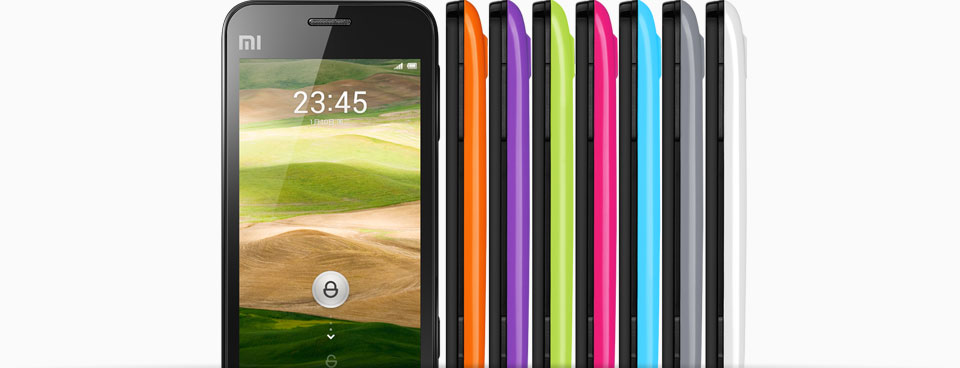
When historians write about the China Internet bubble of 2011-2012 years from now, they are likely to feature Russia’s Digital Sky Technologies (DST) as perhaps the biggest foreign force that pumped in big sums of money and drove up valuations to unsustainable levels. The company, which rose to prominence as an early investor in Facebook (Nasdaq: FB), has been a steady investor in Chinese Internet companies, and is now making headlines yet again with another reported purchase of a stake in Xiaomi, an up-and-coming maker of low-cost, high-performance smartphones. (Chinese article) The Chinese headlines are buzzing with news of this major new investment in Xiaomi, including an interesting twist that saw Internet giant Tencent (HKEx: 700) withdraw from the new investor group after Xiaomi refused to shutter one of its services that competed with Tencent’s Weixin instant messaging service. But I’m digressing from the main subject of this posting, which is that DST has become a major force behind China’s Internet bubble, repeatedly making big new investments that drive up valuations for some interesting start-ups — many of them money-losing companies — to overinflated levels. In a similar pattern seen in DST’s previous investments, unnamed sources in this instance are saying this new capital raising values Xiaomi at around $4 billion — a number that puts it in the same ranks as much older names like Sina (Nasdaq: SINA) and NetEase (Nasdaq: NTES) that have much longer operating histories. I have little doubt that the unnamed sources in this case are inside DST, as similar unnamed sources have also flouted sky-high valuations after DST made other recent investments in e-commerce leaders Alibaba (previous post) and Jingdong Mall, which also goes by the name 360Buy. (previous post) I wrote about Xiaomi earlier this year, as it really does look like an interesting company that is full of market potential due to its niche as maker of low-cost, high-performance smartphones that sell for around $300 each. (previous post) The company previously raised around $90 million in new funding last year, and counts such big names as Singapore’s Temasek, leading chipmaker Qualcomm (Nasdaq: QCOM) and tech investment specialist IDG among its earlier investors. Furthermore, its CEO disclosed late last year that it sold nearly 400,000 of its first smartphone in 2011, and hinted its major new customers could include China Unicom (HKEx: 762; NYSE: CHU), China’s second largest wireless carrier. This kind of early progress is certainly encouraging, though I sincerely believe that DST isn’t doing Xiaomi or any of its other investments any favors by giving them more money than they probably need and filling the market with such high valuations. I’ve previously said that China’s overheated Internet space is in the midst of a much needed correction, which is already starting to see valuations for many companies come down. By the time the bubble finally finishes bursting, look for valuations of many of DST’s investments, and Internet companies in general, to be quite a bit lower than figures now in the market, more in line with peers from the US and Europe.

Bottom line: Russia’s Digital Sky is adding to China’s Internet bubble by investing in companies at inflated valuations, which will come down sharply by the time a current correction ends.

Related postings 相关文章:

Xiaomi: A Fresh Face In Smartphones  小米:智能手机新面孔

More Internet Froth in Alibaba Valuation, Dangdang Price War 阿里巴巴估值奇高凸显网络泡沫

360Buy — More Details But Still Pricey 京东商城值多少?


Airlines on Global Flight, New Tie-Ups Ahead? 航空公司环球飞行,未来有新合作?

A sudden flurry of aviation news in the Chinese media leads me to suspect the government has issued a new directive for the country’s airlines to be more global, setting the stage for what could be an interesting worldwide expansion that could even include some mergers and acquisitions. Of course, I’m ultimately quite cynical about this kind of government directive, if that’s indeed what is driving this recent flurry of news, as it’s a typical move driven by central leaders in Beijing rather than market forces. But that said, I shouldn’t downplay the importance of support from Beijing for this new global drive, since the success of any global expansion will clearly require such support. Let’s look at the flurry of news first to give a flavor of what’s happening. Leading off the reports, Sichuan Airlines is in the headlines as it becomes one of China’s first regional carriers to launch international service to a Western market, in this case to the Canadian city of Vancouver. (company announcement) On the same day of the announcement, the China Daily, which focuses on global readers, also has 2 prominent stories centered on a recent drive by the nation’s airlines to become more global. Neither of those stories contains any hard news, but instead both are focused on efforts by China’s big carriers to recruit more foreign staff, especially flight attendants, to better serve international travelers. (English article) To underscore the internationalization message, the China Daily also contains another article saying Airbus will soon make its first sale to a non-Chinese customer for planes built at its joint venture in the city of Tianjin, with plans to deliver a jet to AirAsia Group in December. This flurry of stories comes just 2 months after China Eastern (HKEx: 670; Shanghai: 600115; NYSE: CEA), one of China’s top 3 carriers, announced plans to partner with Australia’s Quantas (Sydney: QAN) to launch a China-focused regional budget airlines based out of Hong Kong. (previous post) The timing behind all these announcements seems a bit too close to be coincidental, hence my earlier assertion that the airlines are probably acting on a new directive from Beijing to be more international. I’m not normally a big fan of airline stocks, but in this case a new global drive could open some interesting possibilities that might make these and other regional airline stocks interesting buys for their short term potential as acquisition targets and also joint venture partners. Air China (HKEx: 753 Shanghai: 601111), another of China’s top 3 carriers, already has a strong international partner in Hong Kong’s Cathay Pacific (HKEx: 293). But look for potential new tie-ups between the other 2 big carriers, China Eastern and China Southern (Shanghai: 601766; NYSE: ZNH; HKEx: 1055), and also perhaps even some deals involving the smaller carriers like Sichuan Airlines as part of this new international drive.

Bottom line: A recent flurry of moves by Chinese airlines indicates they may be embarking on a drive to become more global, setting the stage for a new wave of potential international tie-ups.

Related postings 相关文章:

China Eastern’s Budget Play: Turbulence Ahead 东方航空成立廉价航空公司:将面临动荡

Hainan Airlines Hits Free Market Turbulence 海南航空:自由市场是福还是祸?

Ctrip Profit Slows Amid Online Travel Rush 在线旅游热潮中携程利润放缓


China Gears Up to Tackle Banking Crisis 中国准备应对银行业危机

A pair of new reports in the Chinese media appear to be readying markets for news that the nation’s banks are on the brink of a crisis, even as Beijing is already devising ways to save them from the flood of bad loans that everyone is expecting. Let’s look at the bigger of the 2 reports first, which has China’s banking regulator expressing surprise at the “contradictory” fact that China’s top banks have yet to report significant rises in their non-performing loans (NPLs), even though many have seen recent surges in some categories of loans considered “problematic”. (English article) The article goes into a bit of detail after that, but the implication is rather straightforward. In a nutshell, the regulator thinks the banks are lying about the magnitude of their bad loan problem, using word games to classify loans as “problematic” even when they are already clearly “non-performing” by industry standards. This kind of word game is completely standard procedure for big Chinese state-owned enterprises (SOEs) that are always eager to give the central government good news, which often means hiding their problems behind this kind of accounting trick. That eagerness was on display in their recently released first-quarter earnings reports, when top lender ICBC (HKEx: 1398; Shanghai: 601398) reported its NPL ratio at the end of March was a sparkling 0.89 percent, while Bank of China (HKEx: 3988; Shanghai: 601988), the industry’s third largest lender, reported an equally stellar NPL rate of 0.97 percent. The banks continue to say there’s no problem, even as just about everyone else suspects they are sitting on a growing pile of bad loans made during a lending binge that was part of Beijing’s economic 4 trillion yuan economic stimulus package at the height of the global downturn in 2009 and 2010. Many of those loans went to local governments for unnecessary infrastructure projects that had no real income sources with which to replay the debt. Most government were expecting to use land sales, which make up their main revenue source, to repay the debt; but that plan is quickly falling into doubt as Beijing shows no signs of easing policies to rein in the overheated real estate market, which has also dampened demand for new land for development. Earlier this year, Beijing indicated it might let the banks “restructure” many of their problematic loans to forestall the looming crisis, essentially allowing them to stop collecting payments for a year or 2 without officially classifying the loans as non-performing. (previous post) It’s unclear if the government ever officially gave the green light for that plan to go forward, but even if it didn’t many observers suspect the banks are using this and other similar accounting tactics to cover up the problems. Following this latest new probe by the regulator, I expect we’ll see most of the banks start to admit to their loan problems in the months ahead, with most confessing to NPL ratios of 3 percent or more by year end. In anticipation of that problem, Beijing is taking what looks to me like a second step to give the banks a relief mechanism to spread the bad loan problem more evenly around the country’s vast SOE system. That appears to be the message from the second piece of news I referred to at the start of this piece, which has Beijing launching a pilot program that will allow banks to securitize their loans and sell them off to other “investors”. (English article) I don’t mean to sound too cynical, but this program, which is starting with a relatively modest quota of 50 billion yuan, or less than $10 billion, looks suspiciously like a way for the banks to sell their bad loans to other major cash-rich SOEs if and when that becomes necessary. In a way, this kind of plan looks smart in helping to minimize the downside for individual companies by spreading the risk around a much wider base. But stock buyers who invest in these SOEs may hardly find that news comforting when, for example, investors in a big SOE like Sinopec (HKEx: 386; NYSE: SNP; Shanghai: 600028) suddenly discover their company is holding billions of dollars in securitized bad loans it purchased under orders from Beijing. Stay tuned for more of these kinds of smoke-and-mirror games as Beijing figures out how it wants to handle this looming financial mess and forces banks to admit to the problem.

Bottom line: Suspicions from China’s banking regulator indicate Beijing is making preparations to deal with its looming banking crisis, with potential plans to spread bad loans around the SOE system.

Related postings 相关文章:

Goldman Flees ICBC as Bank Crisis Looms 中国银行业危机隐现 高盛迅速转让工行股票

AgBank Results: First Look at Banking Winter 中国农业银行财报:银行业的冬天

China Considers New Bank Rescue 中国考虑出台措施援救银行

Jingdong Mall on IPO Fast-Track 京东商城IPO提速

After reports emerged last week that e-commerce giant Jingdong Mall’s on-again-off-again IPO was on again, it now appears the company is fast-tracking the deal with plans to list as soon as September, providing a big test for the anemic market for Chinese Internet IPOs in the US. It’s still too early to say how this IPO will fare, since it’s still at least 4 months away and a lot can happen to broader market sentiment in that time. Reports last week said that revenue at Jingdong, which also is known as 360Buy, reached 21 billion yuan and are expected to double this year. (previous post) The company has yet to provide any profit or loss figures, but I am quite confident it will show quite a big loss for 2011, possibly $100 million or more, when it finally releases that information, as it battles with other e-commerce names like Alibaba and Dangdang (NYSE: DANG) for market share. Lastly, we know from the earlier reports that Jingdong thinks it’s worth around $10-$12 billion, echoing comments from investors when the company received a record-breaking $1.5 billion investment last year (previous post); but the the company’s investment bankers are now saying a $6 billion valuation is much more realistic, meaning a final valuation might come in around $7 billion. Let’s look quickly at the latest reports, which come about a week after Jingdong reportedly held its first official meeting with analysts to discuss its upcoming offer. According to the reports, Jingdong could make its first non-public filings with the US securities regulator as soon as this month, and has hired Kate Kui, a big name former Bank of America Merrill Lynch banker, to lead the IPO charge. (English article; Chinese article). This sudden fast-tracking of the deal marks the latest chapter in schizophrenic signs from Jingdong, whose founder and chief executive Liu Qiangdong said several times early this year that an IPO was at least several years away, even as other unnamed sources said an offering could be coming in the next 12 months. These latest reports seem to indicate the group pushing for an IPO sooner rather than later has taken control of the situation. I find it a big strange that such a cash-rich company wants to make an offering in such a poor IPO climate, though it’s possible Jingdong’s cash situation could be tighter than many people realize. But I suspect the real reason for this fast-tracking is that the investors who bet $1.5 billion on Jingdong last year want to see some quick returns on their investment, since it’s far from clear what China’s e-commerce market will look like a year or more from now due to the rampant competition with the entry of a number of major global players. All that said, I would say the chances for Jingdong to complete its IPO by the end of this year are good, though it’s unlikely to get a great valuation and could end up raising just $1 billion or less due to poor market sentiment towards loss-making Chinese Internet companies.

Bottom line: Jingdong Mall is likely to complete an IPO by the end of the year, but will get a weak valuation on a deal that could ultimately raise only $1 billion or less.

Related postings 相关文章:

Jingdong Mall: Back on the IPO Track? 京东商城上市:“狼”真要来了?

China: Room for How Many Amazons? 中国电商市场到底有多大?

Message to 360Buy: Make Up Your Mind! 京东商城IPO“暗战”

CNOOC Problems Keep Coming in Penglai 蓬莱中海油问题继续出现

Oil exploration giant CNOOC (HKEx: 883; NYSE: CEO) is probably starting to wish it had never partnered with ConocoPhillips (NYSE: COP) to develop oil fields in the Bohai Bay off the northeast China coast, following word that yet another leak has occurred at the problematic project. Frankly speaking, it’s hard to determine how bad the latest spill was at the Penglai oil fields being developed by ConocoPhillips in this troubled joint venture with CNOOC. The latest announcement from CNOOC indicates the spill was relatively minor, with around half a ton of oil leaked into the sea, all of which has already been cleaned up. (company announcement) But it’s natural to try and downplay this kind of thing and sometimes leave out important information, as I learned last week when car maker BYD (HKEx: 1211; Shenzhen: 002594) released a statement on one of its electric taxis that caught fire after a high speed crash, but conveniently omitted the information that 3 people were burned to death in the accident. (previous post) The Penglai oil leaks have provided a non-stop series of headaches for both CNOOC and ConocoPhillips since they first began last year, polluting big areas of ocean and shoreline and leading to calls for the companies to clean up the mess and pay damages to people whose livelihoods had been affected. ConocoPhillips ultimately agreed to pay more than $300 million to settle all the claims, a relatively modest amount for an accident of that magnitude, and CNOOC is also paying a smaller amount. (previous post) It’s possible that CNOOC has just become extremely cautious after all the controversy, and that’s the reason for its latest announcement about what may be a very small spill. Then again, it’s also possible that there’s more to the story than CNOOC and ConocoPhillips are saying, in which case the companies could have a very long summer ahead of them with more clean-ups and negative publicity. At the very least, the pair could be forced to shut down production at Penglai to show they are addressing any safety and environmental concerns and ensuring that the leaks come to an end once and for all. The pair already implemented a similar shutdown for several months last year while they stopped the leaks and cleaned up the spill, causing CNOOC to miss its oil production targets for 2012 by a relatively big margin. A similar shutdown, even if it’s just for a few weeks, could result in similar lost production, along with more negative publicity if the Chinese media decide to start reporting on the problem. Since we really do have very limited information in this case, I won’t make too many predictions except to say that I think there is probably more to this story than the simple company announcement indicates. If that’s true, look for more problems at Penglai during the summer, and possibly for CNOOC to make some downward revisions to its 2012 output target as a result.

Bottom line: The latest spill at the Penglai oil field indicates the problematic project continues to have problems, potentially forcing CNOOC to lower its 2012 output target.

Related postings 相关文章:

ConocoPhillips Avoids Major Liability for Spill 康菲对渤海漏油事件赔偿额较低

Stumbling CNOOC Replaces Chief Executive 中海油换将李凡荣接棒CEO

CNOOC Parent Comes to Rescue

Regulator Exposes China Mobile’s 3G Exaggeration 官员披露中国移动虚夸3G用户数量

I’ve always suspected that China Mobile (HKEx: 941; NYSE: CHL), the country’s dominant mobile carrier, vastly exaggerates the size of its 3G business, and now it seems like the more authoritative national telecoms regulator agrees with me. The news shouldn’t come as a shock to anyone, but it does provide a clearer picture of how the 3G market is developing in China, an important indicator since high-speed data services that can be delivered over 3G and upcoming 4G networks is clearly the wave of the future. Let’s look at the latest news, which has an official from the Ministry of Industry and Information Technology saying the number of true 3G subscribers in China is probably around 80 million, or about half the combined total reported by China Mobile, along with its 2 main rivals, China Unicom (HKEx: 762; NYSE: CHU) and China Telecom (HKEx: 728; NYSE: CHA). (English article) The official puts the blame for the inflated total figure squarely on China Mobile, saying the nation’s top mobile carrier exaggerates its numbers by including many voice-only users among the subscribers for its 3G network. By comparison, Unicom’s and China Telecom’s 3G subscribers use their service for data-related products such as Internet surfing. China Mobile’s latest figures show the company had 62 million 3G subscribers. So if most of the inflation is coming from China Mobile, it’s probably fair to assume that as many as 50 million or more of the company’s 3G users are simply using the service for voice calling, reducing China Mobile’s total figure to a mere 10 million or so. Even that figure could be high, as I have yet to meet a single person who uses China Mobile’s 3G service for Web surfing, with nearly everyone preferring Unicom and China Telecom. Industry followers know the reason for China Mobile’s anemic 3G performance is largely due to the fact that the government forced it to build a network based on a homegrown technology called TD-SCDMA, which has been plagued with reliability problems and lack of handsets. China Mobile has shown signs of planning to boost its 3G efforts following the recent retirement of long-serving Chairman Wang Jianzhou, announcing a steady stream of new handsets and chips for TD-SCDMA phones. But it’s still unclear how serious the company will be on that front, with its new leaders sending out some troubling signals back in April that China Mobile will continue to focus its efforts on next-generation 4G services, which aren’t expected to receive an official license from the MIIT for at least another couple of years. (previous post) Perhaps this latest indirect criticism by the telecoms regulator will embarrass China Mobile into promoting its 3G service more aggressively, which it really needs to do to remain competitive with Unicom and China Telecom. Otherwise, it could not only become a bit player in the 3G space, but could also see its overall market position quickly slip as more and more mobile users migrate to data service plans.

Bottom line: The industry regulator’s disclosure that China Mobile vastly overstates its 3G subscribers reflects the company’s weak promotion of the service and bodes poorly for its future position.

Related postings 相关文章:

China Telecoms Regulator Plays 3G Target Games 工信部制定3G目标

New China Mobile Chief Sends Bad Signals 中国移动新任领导传递糟糕迹象

China Mobile Starts New Era as Wang Leaves 王建宙退休,中国移动开启新时代