The headlines are buzzing today with word that China’s leading theater chain operator Wanda Group has agreed to buy struggling US chain AMC Entertainment, calling it a landmark cultural exchange for Chinese firms expanding overseas. But to those applauding the deal, I would quickly caution not to celebrate just yet, as I see a greater than 50 percent chance that the sale will never close due to opposition from US politicians in this presidential election year. Let’s look at the deal first, which looks benign enough and was actually first reported 2 weeks ago when talks were in advanced stages. (previous post) Under their agreement, Wanda will buy struggling AMC from its current private equity owners for $2.6 billion, in what foreign media are calling the largest ever buyout of a US company by a Chinese one. (English article) Chinese media are noting the deal comes just a week after Rupert Murdoch’s News Corp (Nasdaq: NWSA) agreed to buy 20 percent of Bona Film (Nasdaq: BONA), a leading Chinese film distributor, implying the doors are opening in both directions to cross-border investment in the sensitive media and entertainment sectors. But anyone who follows Chinese investments in the US will know that US politicians love to get involved in anything even remotely sensitive, and that is even more likely to happen in this election year as candidates look for votes by portraying themselves as tough on China. That kind of grandstanding has led to problems mostly in the telecoms space so far, with China Mobile (HKEx: 941; NYSE: CHL), Huawei and ZTE (HKEx: 763; Shenzhen: 000063) all running into recent obstacles in their attempts to expand in the US. Politicians have also attacked the banking regulator for recently allowing several of China’s top banks to set up branches and make small acquisitions in the US for the first time, again reflecting how candidates are seizing on fears of these kinds of Chinese investments to raise their profiles. (previous post) Considering that movies are such a central part of American culture and that movie theaters are clearly a part of that picture, I could very easily see politicians raising objections to this latest deal, questioning the wisdom of letting such an important company into Chinese hands. Never mind that AMC and the theater industry in general are struggling due to tough competition not only from other theaters, but also from DVDs and newer products that let people watch and download movies over the Internet. The politicians won’t care about any of that, and they probably won’t care if AMC goes bankrupt in the end because no other company wants to buy it. All they will care about is looking tough against China in order to gain votes. All that said, I predict we will hear the first political objections to this deal within 2 weeks and potentially much sooner, and that all the negative publicity will give the deal a greater than 50-50 chance of ultimately collapsing, to the benefit of no one except the politicians.
Bottom line: The planned purchase of struggling US theater chain AMC by a Chinese buyer is likely to collapse due to objections from vote-seeking US politicians.
Related postings 相关文章:
◙ Welcome to the US Dollhouse, China Mobile 中移动和万达进军美国料将失败

 I have to admit that perhaps I was wrong in my initial skepticism about Beijing’s motivations in repeatedly delaying approval for Google’s (Nasdaq: GOOG) purchase of Motorola Mobility (NYSE: MMI), speculating that its foot-dragging might have been motivated by political factors. (
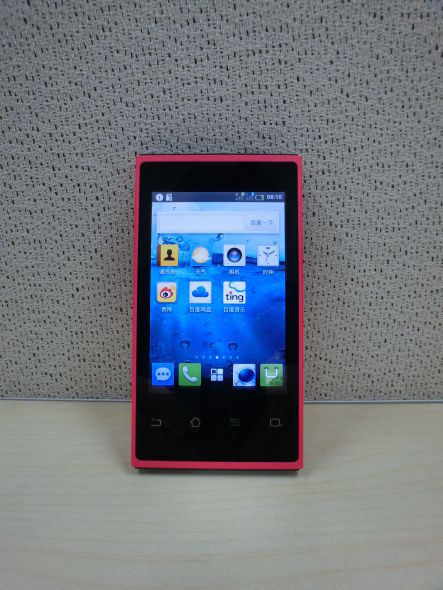 I don’t like to sound too negative for 2 days in a row, but one day after predicting failure for PC giant Lenovo’s (HKEx: 992) new smart TV initiative I have to give a similar forecast for the recent rush into smartphones by a growing number of Chinese Internet players, with search leader Baidu (Nasdaq: BIDU) leading the charge. Chinese media have been buzzing for the last few days about Baidu’s new offering, a low-end smartphone that runs on the company’s self-developed operating system and was co-developed with TV maker Changhong (Shanghai: 600839). (
 There are several interesting developments today on big-name Chinese firms moving into the US, highlighting both the opportunities but also the risks for increasingly assertive Chinese names looking to expand into a market that is at once the world’s largest but also highly suspicious of China. Leading the news is dominant wireless carrier China Mobile (HKEx: 941; NYSE: CHL), whose US expansion aspirations are reportedly running into trouble over familiar security concerns. (
 I was highly skeptical at first about a rumor that Google (Nasdaq: GOOG) might be in talks to sell its Motorola Mobility (NYSE: MMI) handset business to telecoms equipment and cellphone giant Huawei; but the more I think about it the more it makes sense, leading me to speculate that the rumor may actually be true. The source of all the buzz is actually quite small, namely a small mention at the very end of a
  At least it wasn’t the Public Security Bureau. That’s what the public relations people at Huawei Technologies are probably saying as they come back to work this morning, after China’s Commerce Ministry spoke out late last week in the company’s defense after Australia’s government forbid Huawei from bidding to help build a new high-speed network due to security concerns. (