The following press releases and media reports about Chinese companies were carried on July 1. To view a full article or story, click on the link next to the headline.
══════════════════════════════════════════════════════
Alibaba (NYSE: BABA) Eyes $600 Mln Investment in India Online Payment Firm Paytm (Chinese article)
Baidu (Nasdaq: BIDU0 to Invest 20 Bln Yuan in Nuomi.com Over Next 3 Years (English article)
KFC (NYSE: YUM) Forms Alliance With Alipay (Chinese article)
Yingli (NYSE: YGE) Seeks Public Solar Investment With Internet Financing Platform (PRNewswire)
Amazon (Nasdaq: AMZN) to Offer Loans to Sellers in China, 7 Other Countries (English article)
Bottom line: Suning’s Japanese expansion and receipt of a new license to build and operate a private broadband network are both positive developments, but also reflect a lack of quick progress in transforming its core China-based retail business.
Suning in Japanese expansion
A couple of new reports involving Suning (Shenzhen: 002024) made me realize it’s been quite a while since I’ve written about this company that is trying to transform from a traditional retailer to a major e-commerce player. Both reports are interesting and noteworthy, though neither is related to its e-commerce drive, which doesn’t appear to be going anywhere quickly.
One of the deals involves Suning’s purchase of a money-losing Japanese electronics seller 5 years ago, and will see it now plow several billion yuan into a major expansion of the Laox chain of home appliance stores. The second deal has Suning named as one of 4 companies to receive licenses to build broadband networks to offer services under a newly announced pilot program to open the sector to private money. Read Full Post…
Bottom line: Alibaba’s potential new venture to bring Japanese imports to China looks like a smart move that plays to Beijing’s desire to boost consumer spending, and could serve as a template for similar import-related tie-ups.
Alibaba talks tie-up with Yahoo Japan
A potential major new tie-up between Alibaba (NYSE: BABA) and Yahoo Japan (Tokyo: 4689) aimed at bringing more Japanese imports to China looks full of promise, providing a possible major new growth source for the Chinese e-commerce giant. Such a tie-up would be especially exciting because it would bring together 2 of the largest e-commerce companies from the world’s second and third largest economies. It would also receive strong support from Beijing, which is rapidly dismantling many import barriers as it tries to boost consumer spending to prop up a slowing Chinese economy. Read Full Post…
The following press releases and media reports about Chinese companies were carried on May 27. To view a full article or story, click on the link next to the headline.
══════════════════════════════════════════════════════
LeTV (Shenzhen: 300104) to Raise 7.5 Bln Yuan Through Private Placement (English article)
Bottom line: Alibaba’s change of CEO shows that founder Jack Ma is still calling the shots at the company, and a rally for its shares will be short-lived before they continue a gradual downward movement back toward their IPO level.
Alibaba shifts course with new CEO
Investors nervously awaiting the release of e-commerce giant Alibaba’s (NYSE: BABA) latest quarterly results were instead greeted with the surprising news that the company has just named its third CEO in 2 years. Alibaba founder Jack Ma is spinning the story as part of a plan to hand over the running of his company to a generation of Internet-savvy youngsters born after 1970. That may be true, though I do find it somewhat ironic that the replacement of former CEO Jonathan Lu with the younger Daniel Zhang shows quite clearly who is still firmly in control at Alibaba, namely Ma himself, who is hardly a post-1970s youngster. Read Full Post…
Bottom line: A new e-commerce joint venture by Japan’s Itochu and Thailand’s CP Group marks the latest major advance for China’s fledgling free trade zone program, whose policies should eventually expanded to the entire country.
Itochu forms new venture in Shanghai FTZ
China’s fledgling Free Trade Zone (FTZ) program got a new boost last week when a group of corporate giants from Japan, Thailand and China announced a major new retailing joint venture in the original zone in Shanghai. That news came just a week after a major expansion of the Shanghai zone, and the announcement of a plan for 3 additional FTZs in other parts of China.
This sudden expansion of the FTZ program is a welcome development for the many private companies whose growth plans have been stymied for years by China’s huge bureaucracy. That group includes not only big multinationals like Amazon (Nasdaq: AMZN) and HSBC (HKEx: 5; London: HSBA), but also a growing number of homegrown private giants like JD.com (Nasdaq: JD) and Alibaba (NYSE: BABA), which also harbor global aspirations. Read Full Post…
Bottom line: Tencent, Baidu and other Chinese Internet giants should rein in their appetite for new debt in anticipation of an economic slowdown that could sharply dampen their growth.
Tencent doubles bond program to $10 bln
Social networking (SNS) giant Tencent (HKEx: 700) shattered Chinese Internet records late last week when it said it would double the size of its already-large bond program to a massive $10 billion, becoming one of the biggest such programs ever for a private Chinese company. The move is part of a broader trend that has seen Chinese Internet firms raise billions of dollars over the last 2 years through a combination of bond offerings and IPOs, tapping strong investor appetite for their high-growth story.
Such sums would have been unthinkable just 2 or 3 years ago, even though China’s economy was growing much faster then and so were the profits and revenues at companies like Tencent. Floating so much debt is normally not a problem in such boom times, and is often used by strong companies like Tencent to fund their growth. Read Full Post…
Bottom line: Government officials are being forced to deal carefully with newly minted Internet giants like Alibaba, which sometimes commit transgressions due to their youth but also provide huge contributions to China’s economy.
Alibaba a double-edge sword for govt
A trio of stories about Alibaba (NYSE: BABA) nicely summarize both the risks and benefits that China’s Internet juggernauts present for the government, which must walk a fine line between taming these newly minted giants while being careful not to kill such economic powerhouses. In just the space of a decade, Alibaba, alongside Tencent (HKEx: 700) and Baidu (Nasdaq: BIDU), have grown rapidly from venture-funded start-ups to become some of the world’s most valuable companies.
That growth and status has brought not only big prestige to China, but also valuable tax dollars to local governments and high-tech jobs that Beijing wants to replace lower-tech manufacturing labor. But at the same time, such young companies are particularly vulnerable to missteps, which can create chaos in the marketplace and Beijing needs to be careful to control. Read Full Post…
Bottom line: Shares of Tencent and Alibaba are overvalued and will stagnate or fall for the rest of the year, while a group trying to buy out Sungy Mobile may have to raise its offer but should succeed in privatizing the company.
Froth builds on Tencent stock
It seems I was partly wrong when I previously said that e-commerce giant Alibaba (NYSE: BABA) was quite expensive following its record-breaking IPO last year, and that its value would gradually sink to a level comparable with rival Tencent (HKEx: 700). In this case I wasn’t wrong in thinking the 2 companies should be comparably valued. Instead, I should have focused on the potential for a rally in Tencent shares, which have risen sharply to approach Alibaba’s level since the start of the year.
While those 2 companies look comfortably situated in the stratosphere of Internet valuations, the same can’t be said for mobile game operator Sungy Mobile (Nasdaq: GOMO), which has just announced its receipt of a management-led buyout offer. If the attempt succeeds, it would mean Sungy’s life as a publicly traded company could end after less than 2 years, the briefest for a listed Chinese company that I’ve ever seen. Read Full Post…
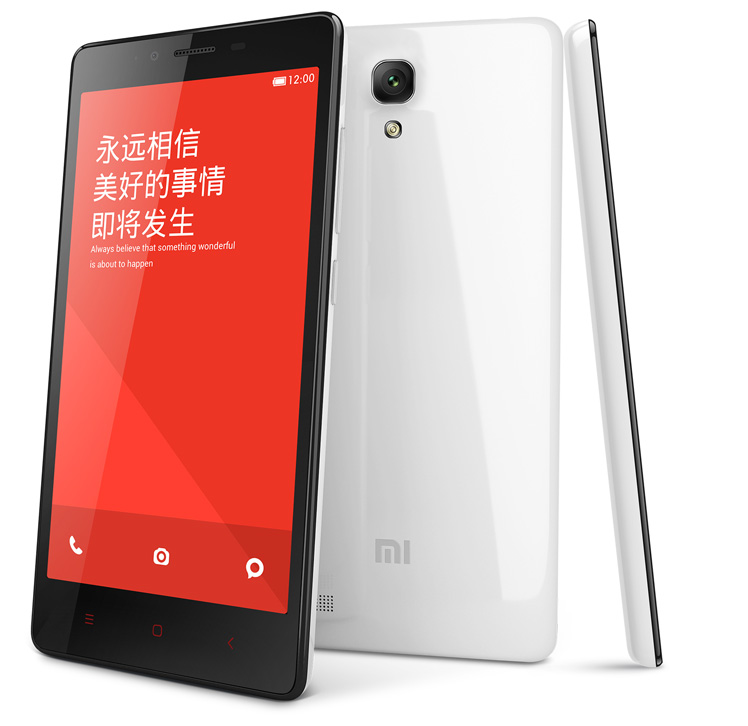
Bottom line: Xiaomi’s diversified sales strategy in India could help reverse recent setbacks, but could ultimately undermine the carefully cultivated cool and trendy image that has been key to its broader success.
Xiaomi adds traditional retailers in India
Smartphone sensation Xiaomi is making a risky move in India, abandoning its trendy online-only sales model as it faces headwinds in a market that has become its first major stepping stone onto the global stage. Xiaomi is calling the decision to sell its phones through traditional retail stores a tactical move, in a nod to the less advanced state of India’s Internet compared its home China market.
While that may be true, this new move also hints at signs of distress as Xiaomi faces new challenges in India on several fronts. One of those centers on an intellectual property dispute with global telecoms titan Ericsson (Stockholm: ERICb), which forced Xiaomi to stop selling its higher-end phones in India last December. The other big challenge is coming from other Chinese smartphone makers like Meizu, which are attempting to copy Xiaomi’s early success in India. Read Full Post…
Bottom line: AP’s willingness to consider new tie-ups with Xinhua is the result of economic pressures being felt by western media, but is unlikely to produce any major alliances due to the potential for negative publicity.
AP open to deeper partnership with Xinhua
Rapid changes in the traditional media realm are creating some strange bedfellows, and the situation looks even stranger in China due to the strong elements of censorship and state control. That odd combination of circumstances is creating a perfect storm that has led some western media companies to do the previously unthinkable and consider partnerships with some of China’s most centrally controlled media. Recent rumors have said that global financial news leader Bloomberg may be considering such a tie-up, and now the latest reports are saying US media giant Associated Press (AP) is also open to such partnerships. Read Full Post…