Tag Archives: Temasek

Alibaba: Let’s Get the Roadshow Rolling  阿里巴巴:我们开始路演吧

After several years of keeping an extremely low profile, Alibaba founder and chief Jack Ma is suddenly coming back out into the open with some major interviews as the e-commerce giant gets set to embark on what could well become one of the longest roadshows for a China Internet IPO. In all fairness, an IPO may not be the only thing on Ma’s mind right now, following his company’s recent deal to purchase about half of the 40 percent of itself owned by Yahoo (Nasdaq: YHOO). Ma and Alibaba have made it known for a while that they intend to sell most or all of that reacquired stake to new investors, and various reports have appeared over the last month stating interest was coming from various investors, including sovereign wealth funds Temasek of Singapore and China’s own China Investment Corp, also known as CIC. In a strong break with the past few years, Ma himself has granted at least 2 new interviews to major media, with both Bloomberg and the Wall Street Journal featuring stories quoting the founder of China’s largest e-commerce company. (Bloomberg report; Wall Street Journal report) As a former reporter in the China Internet sector, I can recall how Ma was quite keen to do interviews in Alibaba’s early days, when he loved to say how his company and the Internet in general were leveling the playing field for small Chinese entrepreneurs. But then he largely stopped doing interviews over the past few years, as the company’s only publicly traded unit, business-to-business marketplace Alibaba.com (HKEx: 1688), saw its growth slow considerably, and as Alibaba’s relationship with Yahoo soured, and its various units became embroiled in a series of controversies. With many of those issues now settled, including the recent Yahoo purchase and the imminent privatization of Alibaba.com, Ma is clearly feeling more confident about stepping back into the spotlight to start trumpeting his company as it seeks to find major new investors and move towards its ultimate goal of an IPO for the entire group. I’ve had a look at the Wall Street Journal and Bloomberg reports, and have to say there’s nothing really ground breaking in either. Ma confirmed that he’s open to investments from Temasek and CIC, and the group’s CFO Joe Tsai also gave some financials, including that Alibaba’s main 2 consumer focused e-commerce sites, Taobao and TMall, collectively earned around $1.8 billion in revenue last year, and that both have profit margins of more than 50 percent. I suspect that Ma will become more public in the next few months as he courts new investors and tries to raise both his company’s profile and valuation even higher than the $30 billion level set with the Yahoo buyout. In terms of timing, I would expect to see the first big new investors on board as soon as the third quarter, and we could also simply see a single major announcement by the end of the year about a new investor group. As to the IPO, the company has given a time frame of 2015 for the offering, although I wouldn’t be surprised to see that moved up by a year or more if a much needed correction starts to accelerate in China’s e-commerce market and investors start to get nervous.

Bottom line: With many of its issues now behind it, Alibaba will raise its profile in the next few months as it seeks new investors and starts to build hype in the run-up to its eventual IPO.

Related postings 相关文章:

Alibaba Buyout: Finally Something for Investors 阿里巴巴筹资为机构投资者提供良机
Yahoo, Alibaba in Slow-Motion Divorce 雅虎和阿里巴巴踏上漫漫离婚路

China: Room for How Many Amazons? 中国电商市场到底有多大?

News Digest: June 8, 2012 报摘: 2012年6月8日

The following press releases and media reports about Chinese companies were carried on June 8. To view a full article or story, click on the link next to the headline.

══════════════════════════════════════════════════════

Hewlett-Packard (NYSE: HPQ) China Head Steve Gill Steps Down After 10 Months (Chinese article)

Apple (Nasdaq: AAPL) Said to Add Baidu (Nasdaq: BIDU) as iPhone Search Engine in China (English article)

Suning.com (Shenzhen: 002024) to Offer In-Store Pick-Up Nationwide (English article)

Alibaba Open to Temasek, CIC Investment to Buy Back Yahoo Stake (English article)

BYD (HKEx: 1211) Wins European Electric Bus Orders for Netherlands Schiermonnikoog (Businesswire)

Russia’s DST Builds More Valuation Froth 俄罗斯DST助长中国互联网企业估值虚高

When historians write about the China Internet bubble of 2011-2012 years from now, they are likely to feature Russia’s Digital Sky Technologies (DST) as perhaps the biggest foreign force that pumped in big sums of money and drove up valuations to unsustainable levels. The company, which rose to prominence as an early investor in Facebook (Nasdaq: FB), has been a steady investor in Chinese Internet companies, and is now making headlines yet again with another reported purchase of a stake in Xiaomi, an up-and-coming maker of low-cost, high-performance smartphones. (Chinese article) The Chinese headlines are buzzing with news of this major new investment in Xiaomi, including an interesting twist that saw Internet giant Tencent (HKEx: 700) withdraw from the new investor group after Xiaomi refused to shutter one of its services that competed with Tencent’s Weixin instant messaging service. But I’m digressing from the main subject of this posting, which is that DST has become a major force behind China’s Internet bubble, repeatedly making big new investments that drive up valuations for some interesting start-ups — many of them money-losing companies — to overinflated levels. In a similar pattern seen in DST’s previous investments, unnamed sources in this instance are saying this new capital raising values Xiaomi at around $4 billion — a number that puts it in the same ranks as much older names like Sina (Nasdaq: SINA) and NetEase (Nasdaq: NTES) that have much longer operating histories. I have little doubt that the unnamed sources in this case are inside DST, as similar unnamed sources have also flouted sky-high valuations after DST made other recent investments in e-commerce leaders Alibaba (previous post) and Jingdong Mall, which also goes by the name 360Buy. (previous post) I wrote about Xiaomi earlier this year, as it really does look like an interesting company that is full of market potential due to its niche as maker of low-cost, high-performance smartphones that sell for around $300 each. (previous post) The company previously raised around $90 million in new funding last year, and counts such big names as Singapore’s Temasek, leading chipmaker Qualcomm (Nasdaq: QCOM) and tech investment specialist IDG among its earlier investors. Furthermore, its CEO disclosed late last year that it sold nearly 400,000 of its first smartphone in 2011, and hinted its major new customers could include China Unicom (HKEx: 762; NYSE: CHU), China’s second largest wireless carrier. This kind of early progress is certainly encouraging, though I sincerely believe that DST isn’t doing Xiaomi or any of its other investments any favors by giving them more money than they probably need and filling the market with such high valuations. I’ve previously said that China’s overheated Internet space is in the midst of a much needed correction, which is already starting to see valuations for many companies come down. By the time the bubble finally finishes bursting, look for valuations of many of DST’s investments, and Internet companies in general, to be quite a bit lower than figures now in the market, more in line with peers from the US and Europe.

Bottom line: Russia’s Digital Sky is adding to China’s Internet bubble by investing in companies at inflated valuations, which will come down sharply by the time a current correction ends.

Related postings 相关文章:

Xiaomi: A Fresh Face In Smartphones  小米:智能手机新面孔

More Internet Froth in Alibaba Valuation, Dangdang Price War 阿里巴巴估值奇高凸显网络泡沫

360Buy — More Details But Still Pricey 京东商城值多少?


Alibaba Buyout: Finally Something for Investors 阿里巴巴筹资为机构投资者提供良机

E-commerce leader Alibaba’s long-awaited announcement that it will buy back 20 percent of its shares from Yahoo (Nasdaq: YHOO) is finally offering investors something they haven’t seen in a long time: A new chance to buy into a Chinese Internet firm that actually earns money. Unfortunately for most investors, they won’t have a chance to buy into the company anytime soon, as Alibaba is likely to sell most of its recently repurchased shares to big institutional buyers willing to fork over a minimum of tens of millions of dollars and more likely hundreds of millions of dollars for a piece of China’s top e-commerce company. But smaller institutional and retail investors could also get their opportunity in the not too distant future, with word that the buyout deal announced earlier this week provides strong incentives for Alibaba to make its own IPO by the end of next year, a deal that could help to return some excitement to the struggling market for Chinese Internet stocks. Just a day after announcing its landmark buyback, Alibaba is reportedly already in talks with a number of institutional buyers who want to purchase some of the stake, including Singapore’s massive sovereign wealth fund Temasek, which wants to invest some $500 million, according to a Chinese media report. (Chinese article) That kind of investment wouldn’t come as a surprise at all, as Temasek has always been particularly bullish on China, with a special interest in companies that are leaders in their spaces. Earlier this month Temasek purchased a major stake in ICBC (HKEx: 1398; Shanghai: 601398) for $2.5 billion, picking up shares that were being sold off by Goldman Sachs (NYSE: GS). (previous post) I would expect to see other major financial investors, including other sovereign wealth funds, insurance companies and pension funds, buying into Alibaba in these latest talks, with a probable minimum investment of $100 million each. On the other hand, don’t look for any new strategic investors like Yahoo to sign on in this new round of stake sales. That’s because Alibaba’s founder Jack Ma seems determined to run his own show and, based on his unhappy experience with Yahoo, doesn’t want strategic investors looking over his shoulder and offering suggestions. But while strategic investors may be out, Alibaba is clearly aggressively courting the financial investors, seeking to quickly sign them up to help it pay off the billions in debt it is assuming to buy back the Yahoo stake for a total of $7.1 billion. The company already counts such big names as Japan’s Softbank and Russia’s Digital Sky Technologies among its current investors, and will no doubt be looking for more high profile names to raise its own profile. While anyone with less than $100 million is unlikely to get a stake in this latest fund raising round, there should still be plenty of opportunity to buy into Alibaba for smaller investors if it moves ahead with an expected plan for an initial public offering by the end of next year. Such an offering could come as a big boost for Chinese Internet stocks in general, which were once investor darlings but have become pariahs over the last year due to a series of accounting scandals. Investors have also grown increasingly intolerant of Chinese web companies that are losing money, which describes the big majority of firms to list over the last 2 years. An Alibaba IPO would address both of those issues, providing a company with reliable accounting due to its relatively long history and major foreign investors, as well as a company that is highly profitable. From a broader market perspective, an Alibaba IPO will be good for the market by offering a quality company with strong long term prospects both at home and abroad. But on the downside, that offering won’t come for at least a year, meaning the broader market for China Internet companies could remain in the doldrums for quite some time unless another exciting offering comes along.

Bottom line: Alibaba’s new capital raising will offer good opportunities for institutional buyers, and an IPO as soon as next year could return some excitement to the weak market for China Internet stocks.

Related postings 相关文章:

Yahoo, Alibaba in Slow-Motion Divorce 雅虎和阿里巴巴踏上漫漫离婚路

Alibaba-Yahoo Buyout: Back to Square One 阿里巴巴股权回购重回起点

Alibaba’s Yahoo Buyback: Deal Finally Near? 阿里巴巴回购雅虎所持股权可能为期不远

Singapore Votes For ICBC 新加坡看好中国工商银行

After scooping up a steady stream of Chinese bank shares being dumped by other major institutional investors over the past year, the Singapore government appears to be placing its bets on China’s biggest lender, ICBC (HKEx: 1398; Shanghai: 601398), based on its latest move. Before I get into the details behind the lmove by Temasek, Singapore’s big sovereign wealth fund, I should say that I agree that ICBC looks like the most attractive of China’s big bank stocks, both due to its traditional position as a business lender in the domestic market and also for its smart foreign expansion strategy focusing on developing markets. Now let’s take a look at the actual news, which has Temasek confirming that it is selling $2.4 billion worth of shares of 2 other top Chinese lenders, Bank of China (HKEx: 3988; Shanghai: 601398) and China Construction Bank (HKEx: 939; Shanghai: 601939). (English article) That sale comes just weeks after Temasek purchased around $2.5 billion worth of ICBC shares from Goldman Sachs (NYSE: GS), which joined other major global banks including Bank of America (NYSE: BAC) and Royal Bank of Scotland (London: RBS) in selling off big stakes they purchased in China’s major lenders 5-6 years ago. (previous post) Throughout the sell-off, Temasek has been one of the few cash-rich investors that has continued to show an interest in the Chinese bank shares, which many investors have avoided over concerns they may be on the brink of a long downturn if and when many of the questionable loans they made under Beijing’s economic stimulus plan during the global financial crisis start to sour. Now Temasek is finally realizing it may not be too smart to invest so much money in this particular sector, and is trimming its holdings to focus on ICBC, which it sees as the strongest player in the group. As I said above, I personally agree with Temasek since ICBC is probably the best positioned to suffer the least in the coming downturn for China’s banking sector. As a lender to businesses, ICBC should have less exposure to the real estate sector, which is expected to drop sharply in the next 2 years as Beijing shows a steadfast determination to cool the country’s overheated property market. On the global front, ICBC has made a steady stream of targeted investments in emerging markets in Latin America, Africa and Southeast Asia, seeking to leverage its expertise in those kinds of markets to diversify from its strong dependence on China. Last year the bank’s profits from overseas operations rose 18 percent, trailing its 37 percent rise in overall profits that year. But as profit growth from domestic operations slows or even contracts in the months ahead, steadiness in the international business will help ICBC to outperform many of its peers.
Bottom line: Singapore’s focus on ICBC reflects the bank’s relatively strong position compared with its peers as the broader Chinese banking sector heads into a downturn.

Related postings 相关文章:

Bank of China Results: Downturn Ahead 中行业绩黯淡 或预示银行业将迎来低迷期

ICBC, Huawei: It’s Cold Out There 工商银行、华为:国外市场冷清

Goldman Flees ICBC as Bank Crisis Looms 中国银行业危机隐现 高盛迅速转让工行股票

News Digest: May3, 2012 报摘: 2012年5月3日

The following press releases and media reports about Chinese companies were carried on May 3. To view a full article or story, click on the link next to the headline.

══════════════════════════════════════════════════════

Temasek Selling $2.4 Billion in BOC (HKEx: 3988), China Construction Bank (HKEx: 939) (English article)

Hony Capital May Sell Elpida (Tokyo: 6665) DRAM Plant to SMIC (HKEx: 981) – Report (English article)

People’s Daily Website (Shanghai: 603000) Up 90% in First 2 Trading Days (Chinese article)

Wal-Mart (NYSE: WMT) Says Last Two Employees in Pork Scandal Released (English article)

Huawei to Build $1.5 Bln Logistics Center in Hungary (Chinese article)

◙ Latest calendar for Q1 earnings reports (Earnings calendar)

Goldman Flees ICBC as Bank Crisis Looms 中国银行业危机隐现 高盛迅速转让工行股票

Everyone is buzzing over word that Goldman Sachs (NYSE: GS) will sell down nearly half of its remaining stake in ICBC (HKEx: 1398; Shanghai: 601398), the world’s largest bank by market cap, with analysts saying Goldman will net a tidy return on this investment made over six years ago before ICBC’s mega-IPO. (English article) But in my view they’re missing the point, as this sale is less a sign of satisfaction and more one of concern, as China’s banks stand on the cusp of a meltdown that could see their bad assets balloon and their share prices tumble in the next 2 years. That concern could easily snowball in the months ahead if China’s big banks really start to see their bad loans jump, leading Goldman to offload its entire remaining stake and perhaps even prompting American Express (NYSE: AXP), one of the banks’ last remaining major western investors, to dump its own ICBC holdings as well. Let’s take a look at the news first, which has western media reporting that Goldman is raising $2.5 billion by selling about 40 percent of its current ICBC holdings to Temasek, the Singaporean sovereign wealth fund. Goldman is selling the stake for about 3 percent less than its publicly traded price before the news broke, representing a fairly modest discount all things considered. This latest sale comes just 5 months after Goldman sold down another $1.5 billion worth of ICBC stock late last year. At around the same time, Bank of America (NYSE: BAC) also sold a its remaining stake in China Construction Bank (HKEx: 939; Shanghai: 601939), as it completely unloaded its 10 percent of the Hong Kong-listed shares of China’s second largest lender over the course of last year. Citigroup (NYSE: C) joined the exodus last month, when it also sold off its long-held stake in a smaller lender, Pudong Development Bank (Shanghai: 600000). Other major western banks that previously unloaded similar major investments in Chinese banks have included Royal Bank of Scotland (London: RBS) and UBS. While analysts have been pointing out that Goldman and Bank of America both need to raise their capital to meet stricter requirements imposed after the global financial crisis, the recent sales by these 2 US giants were undoubtedly also driven by fear that their China investments could rapidly plunge in value if a looming crisis for China’s banks ever materializes. China’s major lenders all survived the global financial crisis with little or no damage, mostly because all were prohibited from investing in the toxic global assets that caused the crisis in the first place. But Beijing sowed the seeds of its own financial meltdown in 2009 by ordering its banks to embark on their own lending binge as part of its 4 trillion yuan stimulus plan to prop up the Chinese economy at the height of the global turmoil. Now many of those loans — especially ones to local governments for dubious infrastructure projects — are showing signs of souring, prompting Beijing to consider a steady stream of measures to delay the inevitable wave of defaults. Worries about a looming crisis weighed heavily last year, with shares of most Chinese lenders falling during even as major global indexes rose. A rally for Chinese bank stocks early this year was most likely behind Goldman’s decision to sell now, as it sought to lock in some gains before the sector starts to sink again. Such a new sell-off has indeed   already started to happen, and could accelerate in the weeks ahead as the Chinese banks start to release their first-quarter earnings results and outlook by the end of this month. If the reports show any signs of weakness, which seems likely, look for the downward share pressure to accelerate, and for Goldman and possibly even American Express to quickly consider selling the remainder of their ICBC holdings to lock in gains while they can.

Bottom line: Goldman’s latest reduction in its ICBC stake reflects growing concern about a looming China bank crisis, with more similar sales likely in the next 6 months.

Related postings 相关文章:

Foreign Banks in China: A Love Affair Ends 外资银行撤资与中国同行说再见

AgBank Results: First Look at Banking Winter 中国农业银行财报:银行业的冬天

More Banking Bad News From Minsheng 民生银行融资揭示银行业困境

Xiaomi: A Fresh Face In Smartphones  小米:智能手机新面孔

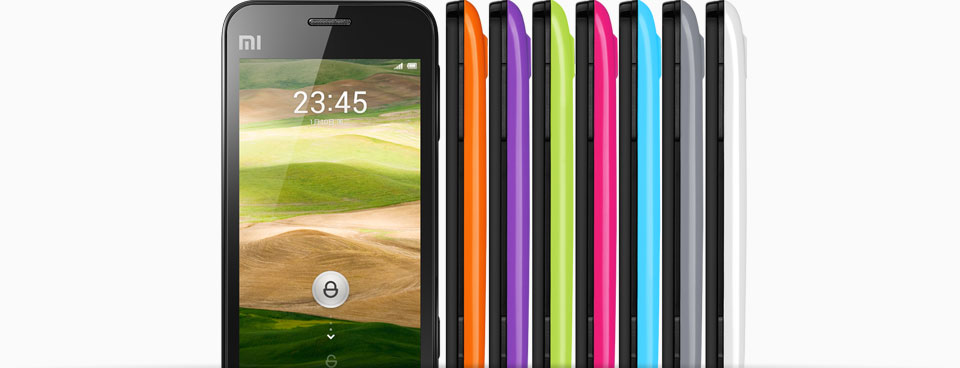
A start-up smartphone maker named Xiaomi has been bubbling up regularly in the headlines since launching its inaugural low-cost, high-performance Android smartphone in August, but what finally caught my attention were some numbers that look impressive in terms of both investment and sales. The company, clearly looking to inject some buzz into its flagship product, held a press conference this week, where CEO Lei Jun told the world that Xiaomi has sold nearly 400,000 of its MI-ONE phones so far, and hinted that China Unicom (HKEx: 762), the country’s second biggest mobile carrier, has placed orders for more than 1 million more. (Chinese article) The MI-ONE looks interesting for a number of reasons, including its relatively low price of around $300 for what reviewers are saying is a very high performance smartphone that can finally take advantage of Unicom’s 3G service, China’s fastest network which is also highly underutilized due to numerous internal problems at the carrier. (previous post) Xiaomi is also taking the interesting tack of using its product to try and build up its Miliao mobile instant messaging service, which the company says now has more than 1 million active users and could be a future revenue source. The company’s prospects have attracted some big names, with big names, with IDG, Temasek and Qualcomm (Nasdaq: QCOM) all among an investor group that recently handed Xiaomi, whose name means “little rice” in Chinese, a hearty $90 million in new funding. Clearly Xiaomi has some strong momentum behind it, though the Unicom deal will be crucial as it will show whether Chinese consumers like this product, which in turn could lead to big overseas orders for consumers looking for lower cost alternatives to popular models from Apple (Nasdaq: AAPL), HTC (Taipei: 2498) and others. Xiaomi will still have a tough road ahead, as Unicom is also preparing to roll out Apple’s popular iPhone 4S in January, and is selling many other 3G models as well in a bid to try to gain some momentum in the domestic 3G market. Xiaomi will most likely need another big funding round soon, as its position as a cellphone maker means it will have to spend big bucks on both manufacturing and new product development. But the signs do look promising, at least initially, and if the Unicom partnership goes well this could clearly be a company to watch for an IPO as soon as late next year.

Bottom line: Xiaomi has good potential as a niche maker of relatively low-cost, high-performance smartphones, and will get its first real test from a new partnership with Unicom.

Related postings 相关文章:

Unicom’s Sputtering 3G: Blame It On the Handsets 联通幡然醒悟 借低价手机扩张3G市场

Unicom, China Telecom in iPhone 4S 中国电信有望领先推出iPhone 4S Race

ZTE Faces More Profit Erosion With Latest Low-Cost Moves 中兴通讯以低价机抢占市场恐损及获利

News Digest: October 11, 2011

The following press releases and media reports about Chinese companies were carried on October 11. To view a full article or story, click on the link next to the headline.

══════════════════════════════════════════════════════

◙ China State Investor Buys Shares in Four Biggest Banks as Valuations Slump (English article)

Alibaba Said to Seek Temasek Financing to Buy Yahoo’s 40% Stake in Itself (English article)

◙ Rumor: TD-LTE Trials Stalled in Two Cities (English article; Chinese article)

Lenovo (HKEx: 992) Delays Internet TVs Due to Regulatory Difficulties (English article)

Yingli Green Energy (NYSE: YGE) Announces New and Improved Warranty Terms (PRNewswire)

More Internet Froth in Alibaba Valuation, Dangdang Price War 阿里巴巴估值奇高凸显网络泡沫

The latest signs of froth in China’s bulging Internet bubble are popping up in several places this week, with new investors in e-commerce leader Alibaba Group boasting a ridiculously high valuation for the company, while the latest price war by Dangdang (NYSE: DANG) underscores the overheated competition. And in perhaps the most revealing of the new developments, even state-owned dinosaur CCTV is jumping on the e-commerce bandwagon, with the launch of its CNTV Mall. (English article) Let’s begin with Alibaba, which has received new investment from a group of blue-chip investors including Singapore’s Temasek, private equity firm Silver Lake Partners and Russia’s Digital Sky Technologies (DST), which are boasting their investment values the company at as much as $32 billion. (English article) This sounds ridiculous for a company that analysts were estimating was worth around $10 billion just months ago, and is reminiscent of DST’s estimate earlier this year shortly after it and others invested $1.5 billion in e-commerce site 360Buy that that company was worth up to $10 billion. (previous post) I wouldn’t be surprised if DST was the one giving the $32 billion figure for Alibaba, and would advise DST’s chief Yuri Milner to take a course in remedial finance before throwing out more such overinflated numbers in the future. In terms of Dangdang, the company is reportedly pressuring consumer electronics companies that sell on its site to lower their prices below those of comparable products on 360Buy, in a campaign that a Dangdang insider says has been named “operation decapitation”. (English article) The name of the campaign itself reflects the hyper competition that has appeared in China’s e-commerce space following the infusion of billions of dollars in new investment over the past year. But the biggest sign of a bubble in my view is the arrival of China Central Television, better known as CCTV, to the market. You know that when a slow-moving dinosaur like CCTV finally joins the game, the party is almost over.

Bottom line: A sky-high new valuation for Alibaba Group and the latest cut-throat campaign from Dangdang are the latest signs of a looming burst for China’s Internet bubble.

本周种种迹象表明,中国互联网泡沫正在成形。阿里巴巴市值被投资者吹捧到高得离谱,当当网(DANG.N)近期打响价格战凸显行业竞争白热化。最能说明问题的莫过于CCTV也进军电子商务领域,推出中国网络电视台商城(CNTV Mall)。首先,来谈谈阿里巴巴。该集团近期获得多家蓝筹投资机构投资,包括新加坡淡马锡控股、私募公司Silver Lake Partners及俄罗斯风投公司数字天空科技(DST)。这些机构称,他们对阿里巴巴的投资,促使该公司市值高达320亿美元。这听起来十分荒谬,因为仅在数月前,分析师估算的阿里巴巴市值仅为100亿美元左右。这不禁让人想起今年早些时候,DST与沃尔玛和百度向京东商城投资15亿美元后不久,就对京东商城估值100亿美元。如果是DST提供阿里巴巴市值320亿美元的数据,我一点也不会感到惊讶,我会建议,DST执行长米尔纳(Yuri Milner)以後夸大这类数据前,应先学会补齐财务知识。有报导称,当当网正向其消费电子产品供应商施压,要求其售价应低于京东商城同类产品,当当网内部人士透露,此举被命名为“斩首行动”。这一名字本身就反映了中国电子商务行业竞争白热化的现状。该领域过去一年来获得了数十亿计美元的新注资。但我认为,中国互联网泡沫的最大迹象是CCTV进军该市场。要知道,像CCTV这样行动缓慢的庞然大物加入时,游戏就基本结束了。

一句话:对阿里巴巴集团估值过高,当当网启动“斩首行动”,这些都是中国互联网泡沫破裂的最新迹象。

Related postings 相关文章:

Muddy Waters, Taobao Mall Wake Up to China E-commerce Hype

360Buy IPO: Let the Delays Begin 京东商城放缓IPO进程

Wal-Mart Finds Bargain in China’s Internet Bubble