For the latest news on U.S.- and Hong Kong-traded Chinese stocks, visit our new Bamboo Works site.
Tag Archives: China company stock news
Latest China company stock news
Stock Markets – The latest finance and Business news about Stock Markets from the former Reuters chief editor Doug Young.
The following press releases and media reports about Chinese companies were carried on January 9. To view a full article or story, click on the link next to the headline. ══════════════════════════════════════════════════════
Yum Brands (NYSE: YUM) Warns China Sales Fell More Than Expected (English article)
Apple (Nasdaq: AAPL) CEO Tim Cook In China For Another Visit (Chinese article)
After a 2012 that most investment bankers would probably prefer to forget, the new year is starting off on a more hopeful note for IPOs with news of offerings from brokerage Galaxy Securities and the website of state-owned media giant Xinhua both generating positive buzz. These latest signs of life follow other similar positive signals in the US late last year, after a commercially-focused social media site named YY (Nasdaq: YY) completed only the second major offering for a Chinese firm in New York during the year and saw its shares perform reasonably well. (previous post) All of this points to a potential rebound for Chinese stocks both inside and outside China in the year ahead, which could unleash a flood of new IPOs by companies that had to wait on the sidelines due to the chilly market last year but are keen to tap financial markets for new funds.
The following press releases and media reports about Chinese companies were carried on January 8. To view a full article or story, click on the link next to the headline. ══════════════════════════════════════════════════════
Two new cases are showing how Chinese regulators are becoming increasingly assertive in the global marketplace, with Beijing agencies fining the world’s top LCD makers for price fixing in one instance and holding up a major sale by global US fruit giant Dole Food (NYSE: DOLE) in the other. The former case, which involves Korea’s Samsung Electronics (Seoul: 005930) and LG Display (Seoul: 034220) and 4 Taiwanese firms, looks like a very tentative step for China into an arena that is already strictly patrolled by western regulators who combat market manipulation. The latter case is a bit more interesting and potential troublesome, as it has slightly political overtones that could be the result of recent tensions between China and Japan over a territorial dispute.
The Year of the Snake could well go down as the time when Baidu (Nasdaq: BIDU) finally lost its dominance over China’s lucrative online search market, following the rapid rise of a new challenger from up-and-comer Qihoo 360 (NYSE: QIHU) that may soon tie-up with global search titan Google (Nasdaq: GOOG). Such an alliance would mark the latest assault in Qihoo’s campaign that has seen its so.com site soar past other more established players to become China’s second largest search engine in just half a year.
The headlines this first week of January have been filled with figures on China’s box office for 2012, with many media predictably focusing on the fact that foreign films overtook domestic ones to win the box office crown last year. But from my perspective, more interesting is the fact that a low-budget domestically produced comedy quietly surged at the end of the year to steal the title as the nation’s biggest earning film of the year, taking the crown from the far more expensive and highly hyped 3D makeover of James Cameron’s “Titanic“.
The following press releases and media reports about Chinese companies were carried on January 5-7. To view a full article or story, click on the link next to the headline. ══════════════════════════════════════════════════════
Less than 2 months after signing a major R&D tie-up with rival Chery, leading south China automaker Guangzhou Automobile (HKEx: 2238) is back in the headlines with news of a similar tie-up with 2 other smaller rivals. This latest move makes Guangzhou Auto look increasingly like a potential consolidator for the many smaller and mid-sized automakers in nearby provinces, potentially molding the company into a future General Motors (NYSE: GM) of China. Auto historians will note that GM has no formal brands carrying its own name, but rather was formed through the consolidation of many smaller brands during a similar consolidation of the US auto industry many decades ago.
A few of the latest headlines reflect a cooling appetite by foreign banks for funding solar energy related projects, creating a worrisome vacuum that Beijing may need to fill as it seeks to stop struggling sector from sinking further still. Two of the latest such headlines look like particular cause for worry, with Canadian Solar (Nasdaq: CSIQ) taking over financial responsibility for a solar power project from one of its construction partners for unspecified reasons that I suspect are related to waning interest by foreign banks in funding such projects. (company announcement) Another similar recent domestic media report says that a Chinese company that insures solar panel sales has just made its biggest-ever payment to JA Solar (Nasdaq: JASO) after the panel maker couldn’t collect payment from one of its overseas customers. (Chinese article)
The following press releases and media reports about Chinese companies were carried on January 4. To view a full article or story, click on the link next to the headline. ══════════════════════════════════════════════════════
Just a couple of weeks after telecoms heavyweight China Mobile (HKEx: 941; NYSE: CHL) complained that Internet giant Tencent (HKEx: 700) was stealing its text messaging business, we’re getting word that the 2 companies may have started talks for a revenue sharing agreement to resolve the dispute. China Mobile’s discontent involves Tencent’s popular mobile instant messaging service WeChat, better known by its Chinese name Weixin, which has soared to prominence in the last 2 years and recently passed the 300 million registered user mark. (previous post) The service allows people to send text messages back and forth over the Internet, letting them circumvent traditional text messaging that is one of the biggest revenue sources for China Mobile and the nation’s other 2 big telcos.


 After a 2012 that most investment bankers would probably prefer to forget, the new year is starting off on a more hopeful note for IPOs with news of offerings from brokerage Galaxy Securities and the website of state-owned media giant Xinhua both generating positive buzz. These latest signs of life follow other similar positive signals in the US late last year, after a commercially-focused social media site named YY (Nasdaq: YY) completed only the second major offering for a Chinese firm in New York during the year and saw its shares perform reasonably well. (
 The Year of the Snake could well go down as the time when Baidu (Nasdaq: BIDU) finally lost its dominance over China’s lucrative online search market, following the rapid rise of a new challenger from up-and-comer Qihoo 360 (NYSE: QIHU) that may soon tie-up with global search titan Google (Nasdaq: GOOG). Such an alliance would mark the latest assault in Qihoo’s campaign that has seen its so.com site soar past other more established players to become China’s second largest search engine in just half a year.
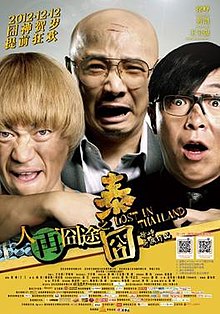 The headlines this first week of January have been filled with figures on China’s box office for 2012, with many media predictably focusing on the fact that foreign films overtook domestic ones to win the box office crown last year. But from my perspective, more interesting is the fact that a low-budget domestically produced comedy quietly surged at the end of the year to steal the title as the nation’s biggest earning film of the year, taking the crown from the far more expensive and highly hyped 3D makeover of James Cameron’s “Titanic“.
 Less than 2 months after signing a major R&D tie-up with rival Chery, leading south China automaker Guangzhou Automobile (HKEx: 2238) is back in the headlines with news of a similar tie-up with 2 other smaller rivals. This latest move makes Guangzhou Auto look increasingly like a potential consolidator for the many smaller and mid-sized automakers in nearby provinces, potentially molding the company into a future General Motors (NYSE: GM) of China. Auto historians will note that GM has no formal brands carrying its own name, but rather was formed through the consolidation of many smaller brands during a similar consolidation of the US auto industry many decades ago.
 A few of the latest headlines reflect a cooling appetite by foreign banks for funding solar energy related projects, creating a worrisome vacuum that Beijing may need to fill as it seeks to stop struggling sector from sinking further still. Two of the latest such headlines look like particular cause for worry, with Canadian Solar (Nasdaq: CSIQ) taking over financial responsibility for a solar power project from one of its construction partners for unspecified reasons that I suspect are related to waning interest by foreign banks in funding such projects. (
 Just a couple of weeks after telecoms heavyweight China Mobile (HKEx: 941; NYSE: CHL) complained that Internet giant Tencent (HKEx: 700) was stealing its text messaging business, we’re getting word that the 2 companies may have started talks for a revenue sharing agreement to resolve the dispute. China Mobile’s discontent involves Tencent’s popular mobile instant messaging service WeChat, better known by its Chinese name Weixin, which has soared to prominence in the last 2 years and recently passed the 300 million registered user mark. (