There’s an interesting news bit coming from China’s rapidly rising pharmaceuticals industry, where global giant Pfizer (NYSE: PFE) has just announced it will join with local Chinese partner Hisun (Shanghai: 600267) to form a joint venture to tap what’s expected to be a boom in demand for low-cost drugs. (company announcement) The back story here, of course, is that China is overhauling its health care, introducing a system of heavily subsidized clinics nationwide to take the place of a former socialist system where state-run work units provided free cradle-to-grave care for all their employees. The overhaul will of course favor domestic makers of quality low-cost drugs, which is exactly what Pfizer is chasing with this tie-up. From the looks of the announcement, the venture will focus mostly on generic medicines, but both companies could also provide  their own intellectual propertyl. I don’t know a lot about Hisun, but presumably Pfizer has done its homework and feels this is a partner it can work with. If that’s the case, this kind of pairing could be just what the doctor ordered for both sides, as Chinese health officials will undoubtedly be happy to give preferable treatment to drugs from a company with both a strong domestic Chinese partner and also one with the Pfizer seal of approval, guaranteeing the quality of its products.
Bottom line: Pfizer’s new joint venture with Hisun should position both companies well to tap huge demand for cheap generic drugs under Chinese health care reform.
中国医药领域的一则新闻:全球医药届巨头辉瑞<PFE.N>刚刚宣布,将与海正药业股份有限公司<600267.SS>成立合资公司,开拓中国需求巨大的低成本药品市场。这一举动的背景是,中国正在推动医改,拟发展国家补贴下的公立自愿医疗保险制度。改革肯定会惠及中国国内高质量低价药品制造商,这正是辉瑞希望进行此次合作的原因。从声明看,合资公司将主要生产非专利药,但双方也可能提供自己的知识产权。我不太了解海正,但估计辉瑞是事先作了功课,并感到这的确是一个可以合作的夥伴。如果是这样,这种组合可能会很理想,因为中国的卫生官员肯定会愿意优待这样一家既有很强的国内制药商合作方,又有辉瑞,这样一家在药品质量上有保障的合作方。
一句话:在中国医改的大背景下,辉瑞与海正成立合资公司,开拓中国需求巨大的低成本药品市场,对双方都有利。
Related postings 相关文章:
◙ Shanghai Pharma IPO Looks Like Good Medicine 上海医药IPO似为一剂良药
 After seeing its solar panel makers struggle for the better part of a year in one of their worst ever downturns, Beijing is finally stepping in to help this promising sector that has fallen on hard times. Yingli Green Energy (NYSE: YGE), one of the stronger players, has announced that it’s just received a 5-year, 1.2 billion yuan ($180 million) loan from two Chinese government-controlled banks, Bank of China and CITIC. (
 now going out and trying to set up an alliance of telcos, cellphone makers and anyone else who will listen to try to promote this system. (
 Lenovo (HKEx: 992) just can’t seem to get big Western markets out of its mind, even as it bills itself as a developing markets specialist. That’s the only conclusion I can reach after reading that Lenovo will buy Germany’s Medion AG (Frankfurt: MDN) in a deal valued at $670 million, its biggest overseas M&A since its purchase of IBM’s (NYSE: IBM) computer business in 2005. (
 Canadian Solar, in a relatively uneven arrangement that will see GCL provide 90 percent of the registered capital. (
 without any equity participation. GCL would clearly be the dominant partner in this arrangement, with a market cap of around $8 billion compared to Canadian Solar’s much smaller $400 million. But this kind of tie-up, if successful, could lead to more similar partnerships that would provide some much-needed consolidation for an industry that is now in the midst of a downturn and faces a potential looming cash crunch. (
 won’t improve and new buyers are becoming a rarity, I expect to see sentiment slide sharply, probably by the end of this year. When that happens, look for not only E-House, but peers like Soufun (NYSE: SFUN) to slip even further. The downturn could even drag down big-name developers like Vanke (Shenzhen: 000001), in a correction that could eventually see market values drop by as much as 30-40 percent from their current overinflated highs.
 First it was LDK Solar (NYSE: LDK), and now wind power company China Ming Yang (NYSE: MY) has become the latest victim of financial markets that are getting cold feet over the alternate energy story. Ming Yang has informed the world it’s shelving a secondary offering plan and even considering a share buyback due to its low stock price. (
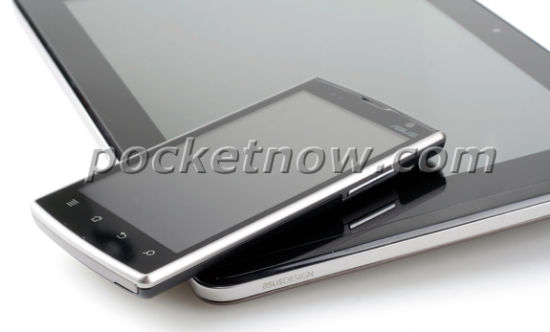 feel like carrying around a bulky tablet. Of course, with a product like this design will be key and only time will tell if consumers like it. I personally like Asustek for its willingness to take risks in new product development, which produced the wildly successful netbook at Computex several years ago. This new product is intriguing because it should appeal to the large number of consumers who want to simplify their lives by not having to carry around so many devices, adapters and so forth. Given Asustek’s record for innovation and the fact that I really think demand exists for this kind of product, I would say the Padfone could stand a strong chance for success, in which case we could see copycats piling into the market by the end of the year.
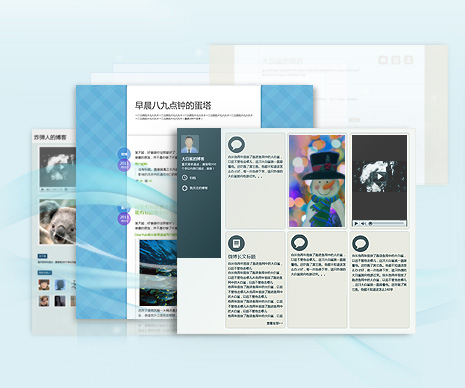 brilliant move by Sina to beef up its social networking unit by combining a Twitter-like offering in Weibo with a Facebook-like one in this new Qing service. Of course, the end goal in all this is to create a company that can ultimately generate big profits and be spun off. Weibo has already shown its early moves in this direction, announcing its first acquisition a few weeks ago after being formally spun off from its parent. (
 Chery Automobile, China’s only major car maker without a foreigner partner, is getting ready to tie the knot with Japan’s Subaru, in what looks like a smart marriage, while a separate newly announced plan for a new plant in Venezuela looks more questionable. First Subaru. After months of on-again-off-again talks, Chery and Subaru’s Japanese parent have reached an agreement in principle that would see them co-produce Subaru cars in northeastern China, foreign media are reporting. (
 facilitate such a move, and has said several times recently that 4G licenses won’t be coming until 2013 at earliest, no doubt in part to give Unicom and China Telecom time to gain share to create a more balanced market. China Mobile seems to finally have accepted this reality with its upcoming aggressive 3G promotion, which could finally help it regain some of the momentum it’s lost to rivals over the last two years. If that happens, look for some aggressive moves in the months ahead and a potentially bloody price war that will help low-cost handset makers like ZTE (HKEx: 763; Shenzhen: 000063), but could hit the bottom lines of all three carriers.