Journalist China

Business news from China By Doug Young.
Doug Young, journalist, has lived and worked in China for 20 years, much of that as a journalist, writing about publicly listed Chinese companies.

He is based in Shanghai where, in addition to his role as editor of Young’s China Business Blog, he teaches financial journalism at Fudan University, one of China’s top journalism programs.
He contributes regularly to a wide range of publications in both China and the west, including Forbes, CNN, Seeking Alpha and Reuters, as well as Asia-based publications including the South China Morning Post, Global Times, Shanghai Daily and Shanghai Observer

China Mobile Nears iPhone Deal 中国移动引进iPhone在即

My headline for this post may be a little misleading, as I’m purely guessing based on the latest media reports that China’s dominant wireless carrier China Mobile (HKEx: 941; NYSE: CHL) may soon sign a long-anticipated deal to sell an Apple (Nasdaq: AAPL) iPhone that can run on its struggling 3 network based on a homegrown Chinese technology. In fact, the actual news in this case is relatively simple, with China Mobile’s new Chairman Xi Guohua telling investors at the company’s annual meeting in Hong Kong that he is talking with Apple about developing an iPhone for a technology called TD-SCDMA, which is the basis for China Mobile’s 3G network. (English article; Chinese article)  Xi, who took over as China Mobile’s chairman in March after the retirement of his long-serving predecessor Wang Jianzhou, didn’t say very much more on the subject, except to add that there were no guarantees that a deal would be reached. The 2 sides had actually previously talked about a TD-SCDMA iPhone as much as a year ago, but they never reached a deal for reasons that were never disclosed. My guess is that the conservative Wang wanted Apple to take most of the risk for developing the TD-SCDMA iPhone, figuring that Apple wouldn’t mind spending lots of its own R&D dollars to develop a model for the world’s largest mobile carrier with more than 600 million subscribers. If that was the case, Apple clearly balked at taking such risk by itself and the 2 sides never reached a deal that would have clearly benefited both, especially China Mobile as it steadily lost 3G market share to more aggressive rivals China Unicom (HKEx: 762; NYSE: CHU) and China Telecom (HKEx: 728; NYSE: CHA), which both offer iPhones for their networks. But the situation may have taken a major turn in March when Wang finally retired after months of rumors, leaving Xi to finally take the reins of a company that has seen its growth slow to a crawl in the last 3 years under Wang’s conservative leadership. Not long after Wang left,  Apple’s Tim Cook came to China for his own first visit since taking over as the company’s chief executive from Steve Jobs. (previous post) Media closely followed Cook’s trip, which included meetings with top government and industry leaders even though no mention was ever made of a visit to China Mobile. Still, I am quite sure that Cook must have met with Xi and other top China Mobile executives during the visit, with discussion of restarting the stalled TD-SCDMA iPhone talks most likely high on the agenda. Unlike Wang, Xi must realize that his company needs to take some major action to develop its 3G business, which is where the future of mobile communications lies. China Mobile already has a huge cash pile that it never seems to spend or return to investors, and I suspect that a newly empowered Xi will finally be willing to spend some of that money to share more of the risk with Apple for developing a TD-SCDMA iPhone. If that’s the case, look for the 2 sides to make rapid progress in their current talks and announce a long-delayed and much needed iPhone deal in the next 2-3 months, which could greatly boost China Mobile’s prospects in the 3G space and its broader overall outlook.

Bottom line: Apple’s stalled iPhone talks with China Mobile appear to have restarted under the carrier’s new, more progressive leadership, with a long awaited deal possible in the next 2-3 months.

Related postings 相关文章:

New Developments, Including iPhone Deal, Heat Up 3G, 4G 中国电信iPhone销售和日益升温的3G、4G最新进展

Apple CEO Cook Stirs Up Guessing Firestorm 苹果CEO库克低调访华意欲何为?

China Telecom Turns Up Volume in 3G Drive 中国电信计划一鼓作气 3G市场欲再下一城


Tencent: Preparing for Breakup? 腾讯或为分拆铺路

Tencent (HKEx: 700) is in the headlines today after releasing quarterly earnings that showed its profit continues to slow, but what caught my eye was another unrelated report saying that China’s leading Internet company is planning a major reorganization. I’ll discuss details of the reports in a moment, but from a bigger picture perspective I have to suspect that this reorganization — if it’s really happening — may be the prelude to a much bigger story that could see Tenent split up into several different companies in the next couple of years, either through its own initiatives or possibly under government pressure depending on the outcome of an ongoing anti-monopoly case. If such a split-up were to happen, investors in the current Tencent could reap big rewards by finding themselves holding stock in a number of promising smaller independent companies, including ones built around its highly successful online games and social networking businesses. Let’s look at the reorganization news first, as clearly that’s the most interesting. According to Chinese media reports, which cite unnamed industry sources, the reorganization now underway would see Tencent divide itself into 6 major groups, including one focused on social networking and another on interactive entertainment. (English article). Long-time followers of Tencent will recall the company started out as an instant messaging specialist that went on to leverage its dominant QQ service to enter a wide array of other Internet spaces, from online games, to search, video and e-commerce. The company is now China’s largest Internet firm, with a market capitalization of nearly $52 billion. The only other Internet firms that even come close to that are online search leader Baidu (Nasdaq: BIDU), with a market cap of about $43 billion, and privately held e-commerce leader Alibaba, which is thought to be worth about $30 billion. Unlike Baidu and Alibaba, which are both focused around a single core area, Tencent’s businesses are quite diverse, which is why a break-up would make more sense to let each separate business are improve its focus and sink or swim by itself. Impetus for such a move may not only be coming from within Tencent, but could also soon come from the government, depending on the outcome of an important anti-monopoly case now being heard in Guangdong province. That case, which opened last month, saw another Internet firm accuse Tencent of using its monopoly status in instant messaging to unfairly dominate other areas as well. (previous post) If Tencent loses that case, which could easily happen, it will suddenly come under big pressure to remedy its monopoly status, which could make a break-up more likely. Meantime, I should also take a quick look at Tencent’s latest quarterly results, which showed that its first quarter net profit grew an anemic 2.8 percent, even as revenue grew a much bigger 52 percent. (results announcement) The weak profit growth despite the big rise in revenues probably reflects Tencent’s highly diversified nature, which includes big new revenues but also big new spending on new businesses. That’s all the more reason the company should break itself up and make each of its different units stand alone as separate entities. Such a move would benefit not only the company itself, but also would satisfy critics of its anti-competitive behavior.

Bottom line: Tencent’s reported reorganization could be a prelude to a break-up, which would benefit investors and appease critics of its anti-competitive behavior.

Related postings 相关文章:

Tencent in Monopoly Spotlight; Baidu Next? 腾讯被诉垄断 下一个是百度吗?

Disney, Tencent Tie-Up to Animate China 迪斯尼、腾讯合作研发动漫

Tencent Shakes Up Search, Group Buying 腾讯搜搜、高朋网巨

Ctrip Profit Slows Amid Online Travel Rush 在线旅游热潮中携程利润放缓

A number of interesting news bits are coming from the online travel space, led by the latest quarterly results from industry leader Ctrip (Nasdaq: CTRP) that show competition is rapidly heating up in this space, where another up-and-comer named Tujia.com has just received new venture funding. After dominating China’s online travel space for years, Ctrip and eLong (Nasdaq: LONG) are getting a recent wave of new competition from others finally waking up to the potential of the online travel sector, fueled by demand from more and more Chinese who have extra money and time to spend on travel. That demand has helped to propel a new field of rivals, including online travel site Qunar, which itself received a major investment from online search leader Baidu (Nasdaq: BIDU) late last year. (previous post) Others moving aggressively into the space include e-commerce giant 360Buy, which also calls itself Jingdong Mall, and now Tujia.com, which specializes in vacation packages. (previous post) Let’s take a quick look at Ctrip’s results, which show the company’s revenue grew a respectable 19 percent in the first quarter, even as profit tumbled 28 percent. (results announcement) A look at the numbers shows that reduced commissions are partly behind the profit decline, as hotels and airlines come under pressure to boost their own profits and also have more platforms to sell their products from. But the big reason for Ctrip’s profit decline appears to be sales and marketing expenses, which jumped nearly 50 percent and now account for more than one-fifth of total revenue. Clearly Ctrip is having to spend a lot more to maintain its growth than it did in the past, reflecting the growing competition in the market that is only likely to get worse, putting further pressure on profits. For the moment at least, investors seem to like what they see in these latest results, initially bidding up Ctrip shares as much as 5 percent after the report came out, though now they are up only 2 percent in after-hours trade. From my perspective, this kind of increased sales and marketing spending will be critical for Ctrip to maintain its market-leading position, and for that reason I wouldn’t be too concerned just yet by this profit erosion. But at some point the company will have to return to profit growth, or risk being abandoned by investors. Meantime, Tujia has just landed a new round of venture funding, with Ctrip itself as one of the investors, along with US travel site operator HomeAway (Nasdaq: AWAY) and US investment firms Lightspeed Venture Partners and CDH Investments. (announcement) No terms were given in the announcement, but I would expect this round is probably in the $10-$20 million range, and the presence of so many high-profile investors means that Tujia should be well positioned to grow in its niche area of providing vacation packages, and could make a New York IPO in the next couple of years. With all these fast-rising players in the market, look for everyone to feel the heat in terms of falling margins, and perhaps even a merger or 2 involving one or more of the big names in the next couple of years.
Bottom line: Ctrip’s latest results reflect intensifying competition in the online travel space, with some consolidation likely in the next 2 years.

Related postings 相关文章:

Baidu’s Qunar: Going Places 百度投资的去哪儿网:前途无量

Jin Jiang Looks for Room at the Global Lodge 锦江集团寻求跻身国际高端酒店之列

360Buy Losing Focus With Travel Plan 京东商城涉足在线旅行服务业 偏离核心业务

Baidu Smartphones Set to Stumble 百度进军智能手机市场或以失败告终

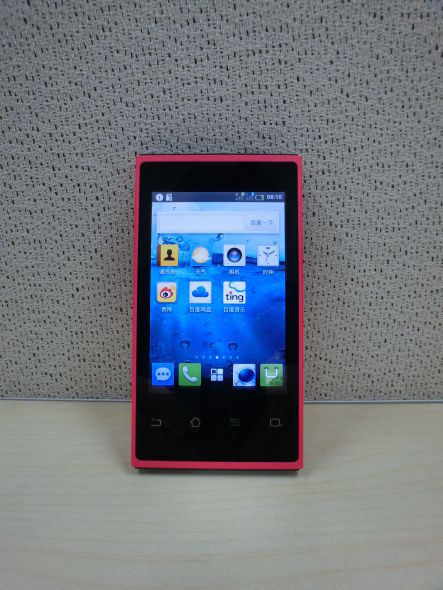
I don’t like to sound too negative for 2 days in a row, but one day after predicting failure for PC giant Lenovo’s (HKEx: 992) new smart TV initiative I have to give a similar forecast for the recent rush into smartphones by a growing number of Chinese Internet players, with search leader Baidu (Nasdaq: BIDU) leading the charge. Chinese media have been buzzing for the last few days about Baidu’s new offering, a low-end smartphone that runs on the company’s self-developed operating system and was co-developed with TV maker Changhong (Shanghai: 600839). (Chinese article; English article) Baidu’s move follows the announcement of similar self-developed smartphones from online game specialist Shanda and Internet security firm Qihoo 360 (NYSE: QIHU), and the latest reports that online game specialist NetEase (Nasdaq: NTES) may also be getting into the space. (English article) Let’s have a closer look at the Baidu smartphone initiative, as that one is the most advanced, following the previous roll-out of an original Baidu model that failed to gain much attention under a partnership with Dell (Nasdaq: DELL). This latest tie-up with Changhong differs from the Dell model in that it is significantly cheaper, costing just 899 yuan, or about $140. I’ve looked at pictures of the new phone, and while a photo doesn’t always tell the full story, the handset truly does look clunky and cheap. I’m a bit surprised that Baidu is partnering with such unexperienced companies, first with Dell and now Changhong, in this initiative that is no doubt costing a lot of money. Dell is more known for its computers than cellphones, though the 2 product types do share some similarities. Changhong is known almost exclusively for its TVs, which have almost nothing in common with smartphones. That said, I really don’t expect much if any success for this new Baidu-Changhong model, which will have to compete with much more attractive low-cost smartphones from fast-growing domestic firms ZTE (HKEx: 763; Shenzhen: 000063) and Huawei, which mostly use Google’s (Nasdaq: GOOG) popular and reliable Android operating system. In fact, Baidu’s initiative looks like an attempt to imitate Google with Android, acknowledging the increasing importance of the mobile Internet. I applaud Baidu for putting big resources into this important new area, but honestly believe its smartphone initiative is set for failure. If Baidu wants to increase its chances of success, it could start by partnering with a major smartphone maker rather than Changhong, though I suspect many such players would be reluctant to form such a tie-up. Meantime, I would make similar predictions for the other smartphone initiatives from Shanda, Qihoo and now NetEase. I’m not sure why all these companies are taking such steps, as the smartphone market is already quite crowded with much more experienced and resource-rich players like Apple (Nasdaq: AAPL) and Samsung (Seoul: 005930). Perhaps all these companies just have too much money and are looking for a place to spend it.

Bottom line: Baidu’s smartphone initiative is likely to fail due to competition and inexperience, but could stand a better chance of success with better manufacturing partners.

Related postings 相关文章:

Huawei Follows ZTE to Lower Profits 继中兴之后华为利润也降低

ZTE Results: Waiting for Returns 中兴坚持低成本手机策略 亟需尽早盈利

Nokia Bets on China Telecom 诺基亚联手中国电信

News Corp Makes New Play for China 新闻集团入股博纳影业集团

Rupert Murdoch isn’t giving up on China’s difficult media market despite his numerous setbacks there, with word that his flagship News Corp (Nasdaq: NWSA) is buying 20 percent of Bona Film (Nasdaq: BONA), one of the nation’s few privately held movie distributors. But if past experience is any indicator, this latest tie-up could also be doomed for disappointment due to the nature of the investment. Murdoch was once one of China’s most bullish media investors, seeing huge potential in its market of 1.3 billion viewers. But the company, now at the center of an unrelated hacking scandal in Britain, largely abandoned the market 2 years ago after many failed ventures, mostly caused by News Corps’ own overzealousness and Beijing’s equally strong reluctance to open the sensitive sector. The main difference this time seems to be strong signals from Beijing that it’s finally preparing to liberalize the sector, including a big new opening to foreign investment. Let’s look at the actual news, which says that News Corp will acquire the stake from Bona’s chief executive. (English article) No other terms were given, but based on Nasdaq-listed Bona’s latest market value, that would translate to a purchase price of about $75 million. From an investor’s perspective, this deal does indeed look like an interesting play into a sector that could soon see rapid expansion. China’s movie market is already the world’s second largest after the US, with the majority of revenue coming from US films. What’s more, the market could soon be set for big new growth, following China’s relaxation earlier this year of a strict quota that previously only allowed the import of 20 foreign films each year. Under the new quota, the number will rise to 34, or about 40 percent higher than the previous total. If ticket sales rise by a similar amount, that could translate to nearly a $3 billion box office next year, a healthy boost from the $2.1 billion for 2010. This latest tie-up follows a number of previous failures for News Corp, including its operation of a TV station that never gained an audience and which it sold a couple of years ago. Other News Corp investments in Internet company NetEase (Nasdaq: NTES) and Phoenix Satellite Television (HKEx: 2008) were successful in terms of financial returns, but were also largely failures in helping News Corp gain access to China. Frankly speaking, this latest tie-up looks most similar to the earlier Phoenix one, which saw News Corp also sign on as a strategic minority investor, only to be largely ignored by the company’s charismatic founder and chief executive Liu Changle. I suspect the same will happen in this latest tie-up, since founders of Chinese companies often like to run their own shows and don’t seem to like listening to so-called strategic investors, regardless of how much experience those investors bring. If that’s the case, look for another frustrating tie-up for News Corp in terms of expanding its China presence, though it will probably earn a nice return on this modest investment.

Bottom line: News Corp’s return to China with a new investment in a film distributor is likely to earn good financial returns, but will ultimately end in frustration in terms of as a strategic tie-up.

Related postings 相关文章:

Disney, Tencent Tie-Up to Animate China 迪斯尼、腾讯合作研发动漫

More Media IPOs From People’s Daily, Shopping Channel 电视购物,继人民日报后又一计划上市的媒体

QVC Opens Shop in China QVC与中央人民广播电台合作运营电视购物频道

Sina Wows With Loss, Weibo Gains 新浪亏损而股价大涨,微博有收获

When is a loss a good thing? In my opinion the answer should be “never,” but investors seem to be taking a different view based on the share price reaction for leading web portal Sina (Nasdaq: SINA) following release of its latest quarterly results. (results announcement) Frankly speaking, I don’t see why investors are getting so excited. Perhaps the results weren’t as bad as many had feared, and perhaps some are encouraged by the progress in monetizing Weibo, Sina’s wildly popular microblogging service that recently passed the 300 million user mark, with more than half of active subscribers accessing the service over mobile phones and tablet PCs. (Chinese article) Whatever the reason, Sina’s shares are up about 7 percent in after-hours trading, though that’s coming off the lowest levels the stock has seen in more than a year. Let’s take a look at the actual results for a better view of what to me looks like a weak quarter. Sina took a rare swing into the red in the first 3 months of the year, reporting a $13.7 million loss versus a $15 million profit a year earlier. But most worrisome was the fact that Sina also reported an even rarer operating loss of $18.1 million for the quarter. Equally worrisome in the latest results were the sharp slowdown in advertising, one of Sina’s main revenue sources, which grew just 9 percent. Other reports point out the advertising slowdown was already a known factor, and that the company’s net loss for the quarter was actually slightly better than analyst forecasts, which could account for the optimistic reaction to the company’s share price. Furthermore, the company also forecast that its advertising revenue growth should rebound slightly in the current quarter meaning it doesn’t see the situation deteriorating in the next few months. From a broader perspective, I said last week that I liked Sina’s plans to roll out a points rating system for Weibo that would allow users to judge each others’ credibility, which seemed like a good proactive move to address Beijing’s concerns about the spreading of false rumors on the microblogging site. (previous post) That kind of action will be especially important as Sina tries to turn Weibo into a profit engine, since the company seems to be taking a lax attitude towards implementing a real-name registration requirement for the service mandated by Beijing. In fact, the regulatory risk factor probably remains the biggest danger for Sina going forward, as Beijing could theoretically order Sina at any time to immediately close all accounts that haven’t registered by their real names, which I would expect is at least half of the 300 million users. All that said, look for a mild rebound in Sina shares over the next few weeks on this latest report, though that could easily change if any new negative sounds come out of the government in Beijing.

Bottom line: A jump for Sina shares based on its latest results is probably due to relief that the numbers weren’t worse than expected, with a modest rally likely in the next couple of months.

Related postings 相关文章:

Sina Gets Proactive on Weibo 新浪微博的积极举措

Sohu Disappoints Again, LDK Cuts Inspire 搜狐再次令人失望,江西赛维裁员鼓舞人心

China’s Microblog Crackdown Continues 中国继续加强微博管控 新浪或受冲击


Renren: China’s Next Gaming Company? 人人网:中国下一个网游企业?

Renren (NYSE: RENN) has reported a widening loss that should normally be worrisome, and yet investors seem to be focusing on surprising strength in the online game business for this leading social networking site, which could perhaps finally lead it to its goal of long-term profits. The upbeat news for Renren’s game business comes as another major online game developer, Japan’s Nexon (Tokyo: 3659), is also reporting strong growth in its China business, testifying to the resilience of this market dominated by teen-agers and 20-somethings who seem less like to reduce spending on their hobby even as China’s economy shows signs of slowing. In fact, the slowing economy hit Renren’s other main business, advertising, in the first quarter, with ad sales climbing an anemic 15 percent as the business experienced a “challenging period”, Renren said in its results announcement. The advertising slowdown is hardly unique to Renren, with other major ad-dependent companies also like Sohu (Nasdaq: SOHU) and Phoenix New Media (NYSE: FENG) also reporting weakness in the most recent quarter. But while Renren’s advertising revenue reached just $9.3 million for the quarter, online game revenues soared 90 percent to $17.5 million, meaning games now account for more than half of Renren’s revenue. Despite that rise, the company’s net loss ballooned to $13.6 million, far bigger than the $2.6 million a year earlier. Investors clearly seemed to be focused on the upbeat story in online games, bidding up Renren shares by nearly 3 percent in after-hours trading after the results came out. If online games can continue growing at a similar rate, the business could potentially lead Renren to the elusive goal of long-term profitability, although such a shift would make the company look more like an online game company competing with names like Shanda Games (Nasdaq: GAME) and NetEase (Nasdaq: NTES) rather than a social networking company like Facebook. If that happened, Renren certainly wouldn’t be the first to make such a transition, as NetEase itself started out as a portal company before becoming a gaming giant, and gaming leader Tencent (HKEx: 700) also rose to fame on the back of its popular QQ instant messaging platform. Of course, the big risk in moving into online games is becoming dependent on individual game titles as a major revenue source, meaning one needs to develop or license a steady stream of new games to stay successful. Meantime, Nexon, supplier of a popular gaming title to Tencent, has said its China sales also rose similarly by nearly 90 percent in the first quarter and should remain robust throughout the year, even as the broader China online game market is only expected to grow about 12 percent. (English article) All that says that there’s still plenty of growth opportunity in China’s online game market despite the broader economic slowdown, though companies with popular titles and a wider arrange of complementary social networking offerings like Renren and Tencent could be better positioned to thrive in the current climate.

Bottom line: An unexpectedly rapid growth in gaming revenue could help lead Renren into the profit column by the end of this year, transforming it into an online game play.

Related postings 相关文章:

NetEase: Still a Gamer With WoW Renewal  网易续签《魔兽世界》运营权

Online Games: Where’s the Excitement? 中国网游企业增长有限

Shanda Delists: Thanks for the Profits 盛大网络退市:获利可喜

Lenovo’s TV Gamble: Failure Ahead? 联想电视赌注:未来会失败吗?

I should credit leading PC maker Lenovo (HKEx: 992) for being ahead of the curve by releasing its new smart TV in China last week, getting a slight lead on a widely anticipated launch for by Apple (Nasdaq: AAPL) for a similar new product group that could revolutionize the way people watch TV. (English article) Reviews are still few for Lenovo’s new product, a 55-inch TV called the K91; but based on its past track record as a company with limited capability in new product design, I would offer only a very small chance for this product to succeed, potentially costing Lenovo hundreds of millions of dollars in development and marketing costs. The reason for my pessimism is simple: Lenovo, a specialist in PCs for developing markets, has never shown any ability to be a leader in new product design, especially in areas where it has little or no experience. Its previous forays into cellphones, gaming consoles and tablet PCs have all been mostly flops, failing to generate any buzz or excitement after having to compete with better designed products from the likes of more innovative firms like Apple, Samsung (Seoul: 005930), Asustek (Taipei: 2357) and HTC (HKEx: 2498). Given that poor track record, I have little reason to believe this latest initiative will succeed either, especially since such smart TVs are a completely new category and thus there are few products out there to use as a guidebook into what works and what doesn’t for this area. I do at least have to give Lenovo credit for trying hard by buying state-of-the art technology for its first smart TV, with components coming from such top-end suppliers as chip designer Qualcomm (Nasdaq: QCOM), audio technology firm DTS (Nasdaq: DTSI) and its operating system based on Google’s (Nasdaq: GOOG) popular Android platform. The company may also be making a smart choice by launching the product in its home China market, where it is the dominant PC brand and which accounts for around half of its sales. But its early launch even in China could mean very little if its product doesn’t contain content and functionality that ordinary consumers want. What’s more, competing products from Samsung and especially Apple are likely to hit the market in a matter of months, meaning Lenovo won’t have much of a head-start over these rivals whose products will no doubt contain more features and generate more buzz than the Lenovo TVs. Lenovo hasn’t said very much about response for the product in the week since its launch, saying only that performance has exceeded its expectations. (Chinese article) But considering its past track record, look for the K91 to post disappointing sales over the longer term, perhaps in the tens of thousands this year, and for this broader smart TV initiative to end up as a failure for Lenovo like many of its other new product initiatives.

Bottom line: Lenovo’s new smart TV initiative is likely to fail despite an early head-start over rivals in China, with products from foreign rivals likely to eventually dominate the market.

Related postings 相关文章:

NEC China Cellphones: New Lenovo Tie-Up? NEC计划重回中国手机市场 或与联想联姻

Lenovo Completes Leadership Change, Yang Uninspired 联想完成高层调整,杨元庆难鼓舞人心

Apple Feasts on China, Baidu Burps 苹果在华享受盛宴,百度盛宴停顿

Bottom line:

China: Room for How Many Amazons? 中国电商市场到底有多大?

China’s e-commerce space seems to get noisier by the day, with about a half dozen companies vying to become the nation’s next Amazon (Nasdaq: AMZN) by launching a steady stream of new initiatives in recent months taking them into a dizzying array of new product areas, many far removed from their roots. But at the end of the day there may only be room for 2 or possibly 3 mega online retailers in the market, and we should expect to see many of these aggressively expanding players ultimately either merge with rivals, or more likely quietly shutter their online shops in the next 1 to 2 years as they feel the heat of excessive competition now gripping the market. The latest in the steady flow of new initiatives has Suning (Shenzhen: 002024), better known for its bricks-and-mortar shops selling home appliances and electronics, opening a wine shop this week on its fast-expanding e-commerce site. (English article) News of this new online direction actually first emerged last month, along with reports that Suning would also get into the even more unrelated business of online travel services. Suning is hardly the only one to be branching into all kinds of strange new directions these days in the online space. Its forays into wine and travel come as the country’s second largest e-commerce site, 360Buy, which also goes by the name of Jingdong Mall, has also embarked on its own series of strange initiatives far beyond its original focus as an online electronics seller. Earlier this year the company launched a new book-selling business, and more recently reports have emerged that it will also get into the somewhat unrelated real estate and travel services businesses. (previous post) Then there’s Dangdang (NYSE: DANG), China’s only publicly listed e-commerce company, which began life as an online book seller similar to Amazon. But also similar to Amazon, the company has recently expanded into a number of new directions, including a major tie-up with GOME (HKEx: 493), one of China’s top bricks-and-mortar electronics retailers, in a bid to enter the online market for electronics and home appliances. If all of this is starting to sound like everyone is stepping on everyone else’s turf, it’s because that indeed seems to be what’s happening, with apparently little or no regard for profits or focusing on strategic new areas to complement existing core businesses. Not to be outdone in all this, the nation’s leading e-commerce site TMall, owned by Alibaba, is reportedly gearing up to significantly beef up its presence in the electronics space by signing major names like Philips (Amsterdam: PHG), Lenovo (HKEx: 992) and LG Electronics (Seoul: 066570) to an expanded area in its online mall dedicated to the highly competitive space. Outside all this expansion by domestic names, US retailing giants Wal-Mart (NYSE: WMT) and Amazon itself are also aggressively building up their China presences, the former through its investments in another major site called Yihaodian and the latter through its Joyo platform purchased several years ago, which recently changed its name to Amazon China. The Chinese e-commerce market is certainly big and can support more than one major player, though I seriously doubt it can support all these big names now scrambling to get into just about any new area they can find. The broader e-commerce market itself was worth around 500 billion in 2010, meaning perhaps its now worth about $100 billion — certainly not a small sum but also not enough for all the companies now chasing that limited pot of dollars. At the end of the day, look for 2 or perhaps 3 of these big players to survive in the longer term, with profitable companies like TMall and ones with cash-rich backers like Amazon China and Yihaodian, standing the best chances for success. But even those companies may have to make major adjustments before the current situation stabilizes, bringing widespread pain to nearly everyone as players open and close new business areas before they find the right mix.

Bottom line: The recent rapid expansion of major e-commerce firms into new product areas is unsustainable, and will end with many failures before 2-3 players emerge after a coming cleanup.

Related postings 相关文章:

Alibaba’s Tianmao Takes on Electronics 天猫发力家电市场

Dangdang, GOME In New Alliance, More to Come 国美携手当当网 或开启类似合作序幕

360Buy Losing Focus With Travel Plan 京东商城涉足在线旅行服务业 偏离核心业务


Dongfeng Joins China Own-Brand March 东风追逐中国民族汽车品牌复兴大潮

China’s domestic car makers are continuing their drive to develop their own brands in their search for bigger profits outside their foreign joint ventures, with Dongfeng Motor (HKEx: 489) the latest to join that march as it prepares to revive its mothballed namesake brand. But success for these new initiatives is far from guaranteed, and Dongfeng and the many other Chinese automakers to announce similar own-brand plans in recent months certainly aren’t preparing to abandon their lucrative foreign joint ventures anytime soon. Dongfeng itself recently launched another new brand, called Venucia, with longtime Japanese partner Nissan (Tokyo: 7201) (previous post); and more recently news has emerged that it is in talks for yet another foreign joint venture with France’s Renault (Paris: RENA). (previous post) According to a Chinese media report, Dongfeng is currently working on a plan to revive its namesake brand using technology from France’s Peugeot (Paris: UG), and could show the first models at the Shanghai Auto Show next spring. (English article) China auto buffs may want to have a look at this report, as it contains a detailed history of the Dongfeng name, which was China’s first self-developed brand with its launch in the late 1950s. But production of the car was short-lived, and the brand has been absent from Chinese roads now for more than half a century. Dongfeng’s plan follows a range of similar ones by other Chinese automakers, all of which also have successful joint ventures with major foreign automakers. News recently emerged that SAIC (Shanghai: 600104), China’s largest automaker which has joint ventures with GM (NYSE: GM) and Volkswagen (Frankfurt: VOWG), was planning to revive its Shanghai brand of cars. (previous post) At the same time, FAW Auto has been working on a 1.8 billion yuan plan to revive Hongqi, or Red Flag, a brand that was once synonymous with luxury cars in China but ceased production in the 1980s. Meantime, Beijing-based BAIC, which has a joint venture with Mercedes, is also rolling out its own brand cars based on technology it purchased from Swedish car maker Saab. Many of these plans have the common trait of using older foreign technology as their basis, which is probably a smart move as all of these Chinese companies are relatively inexperienced at developing their own new models. Still, launching a new brand is far from easy, as it requires new infrastructure to service such brands and also marketing campaigns to raise public awareness. What’s more, the market is already quite crowded and showing signs of slowing down. The Hongqi, Shanghai and now Dongfeng initiatives all look smart from a marketing perspective, as all will draw on well-known historical brands that should quickly grab attention from Chinese consumers. At the end of the day, I would expect some of these brands to succeed, with perhaps the Shanghai and Hongqi brands having the best chance for gaining some traction with domestic car buyers. The ones that fare worse will end up costing their developers big losses, and could easily see some of these older brands returned to the historical junk pile once again.

Bottom line: Dongfeng’s revival of its namesake brand is part of a trend by Chinese automakers to develop their own brands, with about half of these new initiatives likely to succeed.

Related postings 相关文章:

2 China Car Brands Set for Renaissance? “上海”和“红旗”汽车将重出江湖

Nissan, VW Jump on China Brand Bandwagon 日产和大众进军中国低端车市场

Geely Leans on Struggling Volvo 吉利依靠处于困境中的沃尔沃

Alibaba-Yahoo Buyout: Back to Square One 阿里巴巴股权回购重回起点

When the history books are finally written, the ongoing divorce between e-commerce leader Alibaba and its controlling stakeholder Yahoo (Nasdaq: YHOO) could well go down as one of the longest in corporate history. But unlike the case with most divorces where messy issues like who gets to keep what assets complicates the matter, this case will see Yahoo taking most of the blame for the protracted delays, which have been extended yet again with the sudden resignation of Scott Thompson just a half year after he took over as CEO of the tarnished US Internet giant. (English article) For those who haven’t followed this story too closely, Thompson has been the subject of a tempest-in-a-teapot scandal over the last couple of weeks after a dissident Yahoo shareholder discovered the new CEO had made misstated part of his degree on his resume, claiming a double degree when in fact he only had a single one. Perhaps I’m being too harsh in calling this scandal a tempest in a teapot, as clearly it’s improper to exaggerate on one’s resume. At a more fundamental level, this gaff does seem to highlight the dysfunctionality that seems to be all too common at Yahoo these days, which brings me back to the original point of this posting, namely that this latest development will deal yet another major setback to Yahoo’s long and tortured talks to sell back some or all of the 40 percent stake it owns in Alibaba. To recap briefly, the pair were all smiles when they first announced their union in 2005, with Yahoo buying its 40 percent of Alibaba — now worth more than $10 billion — for just $1 billion. The honeymoon didn’t last for very long, and relations soured considerably under the brief tenure as CEO of Carol Bartz, who repeatedly clashed with Alibaba founder Jack Ma before her abrupt firing last September. (previous post) With Bartz out of the picture, Yahoo started to negotiate a sale of the stake back to Alibaba last fall, but unreasonable expectations by both sides, combined with a lack of leadership at Yahoo later caused those talks to collapse. After Thompson’s hiring, both sides returned to the bargaining table earlier this year, and foreign media were reporting as recently as a week ago that a deal might be just weeks away that would see Yahoo sell 15-25 percent of its stake back to Alibaba. I suspect that Thompson was a major driver of that deal, as he was clearly in control and keen to resolve that issue so he could focus on his much bigger task of returning Yahoo to health. If that was the case, that means that Thompson’s resignation, which has also thrown Yahoo’s board into turmoil, could easily mean the deal being negotiated will now be scrapped. What’s more, the board, which has named an acting CEO, is likely to take at least another couple of months to name a new long-term chief executive, who will then need to get acquainted with the company before relaunching any buyback talks. At this rate, I seriously doubt the 2 sides will be able to reach a deal this year, and the earliest we could see an end to this troubled marriage would be in the first half of 2013.

Bottom line: The sudden resignation of Yahoo’s new CEO will further delay its ongoing divorce with Alibaba, with a deal unlikely until the first half of 2013 at the earliest.

Related postings 相关文章:

Alibaba’s Yahoo Buyback: Deal Finally Near? 阿里巴巴回购雅虎所持股权可能为期不远

Alibaba: Let’s Get This Show Finished 阿里巴巴和雅虎赶紧“离婚”吧

Yahoo: A Good Time to Break From Alibaba? 雅虎与阿里巴巴分手时机还不成熟