It’s the beginning of June, and that means it’s time for the nation’s automakers to release their monthly sales data that will undoubtedly show modest to moderate growth, with the possible exception of some domestic automakers that are suffering in the industry’s current slowdown. But the real picture could be far worse than those reports indicate, based on the latest cautionary words from the nation’s biggest association of auto dealers. Those words of caution from the China Automobile Dealers Association come less than a month after the group warned that inventories of unsold cars were rising above what is normally considered healthy levels at dealerships selling 3 of the nation’s top brands, Geely (HKEx: 175), Chery and BYD (HKEx: 1211; Shenzhen: 002594), as well as at Honda (Tokyo: 7267) dealerships. (previous post) That warning reflected the reality that auto manufacturers, whose monthly figures usually reflect shipments to dealers and not actual sales, were sending many more cars to their dealerships than the dealers were actually selling. The slowdown has gripped the entire market for much of the last 12 months, as car sales dropped off considerably after turbocharged growth in 2009 and 2010 fueled by incentives from Beijing. Now the same Auto Dealers Association is saying that inventory levels are rising at an alarming level, with the average level now at 60 days at the end of May compared with 45 days just a month earlier. (English article) An association executive said the rapid rise in unsold cars is unsustainable, and that dealers are being forced to sell vehicles at big discounts to prevent inventory levels from getting even higher. Most observers are expecting to see modest gains tomorrow when the association that tracks China automobile sales releases its monthly figures for May, which reflect shipments to dealerships. Some individual manufacturers have already reported their own May figures, including GM (NYSE: GM), which reported its May sales rose 21 percent on strength from 2 of its lower-end brands. While GM’s numbers may be relatively reliable, the same may not be true for some of China’s domestic players like Geely, BYD and Chery, which have continued to churn out new cars and ship them to dealers who then discover there is little or no demand for the product. Analysts are already predicting the inventory build-up will force those dealers to offer steep discounts, leading to price wars that could ultimately infect not only the domestic automakers but also the big global players like GM and Volkswagen (Frankfurt: VOWG) as well. Dealers are also likely to feel the pinch, with many potentially being forced out of business as they are forced to sell their inventory at a loss. On the whole, it looks automakers and their dealers could be facing a bloody summer ahead, with many of the domestic players being forced to idle large amounts of production capacity by the fall.
Bottom line: An unsustainable inventory build up at Chinese auto dealers will lead to bloody price wars in the summer, followed by sharp reductions in output for many domestic players in the fall.
Related postings 相关文章:
◙ Auto Inventory Builds, Pain Ahead for Domestics 中国低端车库存增加 本土车企面临苦日子
 I hope readers will excuse me for my headline calling an upcoming IPO by China’s top nuclear power company “too hot to handle,” but in all honesty that’s really what I think about this plan, which seems ill conceived and likely to highlight just how unpopular nuclear power is right now. The plan being discussed has just been approved by China’s environmental regulator, and would see China National Nuclear Power Co raise funds to develop $27 billion worth of projects in its pipeline. (
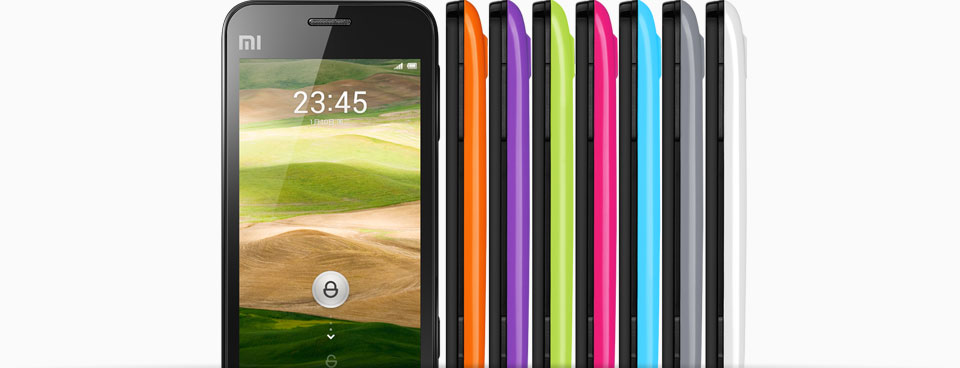 When historians write about the China Internet bubble of 2011-2012 years from now, they are likely to feature Russia’s Digital Sky Technologies (DST) as perhaps the biggest foreign force that pumped in big sums of money and drove up valuations to unsustainable levels. The company, which rose to prominence as an early investor in Facebook (Nasdaq: FB), has been a steady investor in Chinese Internet companies, and is now making headlines yet again with another reported purchase of a stake in Xiaomi, an up-and-coming maker of low-cost, high-performance smartphones. (
 A sudden flurry of aviation news in the Chinese media leads me to suspect the government has issued a new directive for the country’s airlines to be more global, setting the stage for what could be an interesting worldwide expansion that could even include some mergers and acquisitions. Of course, I’m ultimately quite cynical about this kind of government directive, if that’s indeed what is driving this recent flurry of news, as it’s a typical move driven by central leaders in Beijing rather than market forces. But that said, I shouldn’t downplay the importance of support from Beijing for this new global drive, since the success of any global expansion will clearly require such support. Let’s look at the flurry of news first to give a flavor of what’s happening. Leading off the reports, Sichuan Airlines is in the headlines as it becomes one of China’s first regional carriers to launch international service to a Western market, in this case to the Canadian city of Vancouver. (
 After reports emerged last week that e-commerce giant Jingdong Mall’s on-again-off-again IPO was on again, it now appears the company is fast-tracking the deal with plans to list as soon as September, providing a big test for the anemic market for Chinese Internet IPOs in the US. It’s still too early to say how this IPO will fare, since it’s still at least 4 months away and a lot can happen to broader market sentiment in that time. Reports last week said that revenue at Jingdong, which also is known as 360Buy, reached 21 billion yuan and are expected to double this year. (
 Oil exploration giant CNOOC (HKEx: 883; NYSE: CEO) is probably starting to wish it had never partnered with ConocoPhillips (NYSE: COP) to develop oil fields in the Bohai Bay off the northeast China coast, following word that yet another leak has occurred at the problematic project. Frankly speaking, it’s hard to determine how bad the latest spill was at the Penglai oil fields being developed by ConocoPhillips in this troubled joint venture with CNOOC. The latest announcement from CNOOC indicates the spill was relatively minor, with around half a ton of oil leaked into the sea, all of which has already been cleaned up. (
 An interesting trend is happening in China’s fledgling hotel space, where operators are diversifying their offerings by acquiring new brands in a bid to keep growing and appeal to a wider range of customers. China Lodging Group (Nasdaq: HTHT) has become the latest operator to make a move in that direction, announcing it has increased its stake in the Starway hotel chain to become the brand’s majority shareholder. (
 Renren (NYSE: RENN) investors tired of seeing losses quarter after quarter could soon have another alternative as China’s leading social networking site reportedly plans to spin off its online game unit into a separately listed company. If true, the news would mark the latest plan by an Internet company to spin off an individual business into a separate unit, as part of a broader trend by this sector to provide investors with clearer choices focused on specific businesses like games or e-commerce. Many of China’s Internet companies, especially the older ones, often have lots of different businesses, from portals, to games, e-commerce and social networking, under a single company. One or more of the businesses are often profitable and end up subsidizing the others that are losing money — frustrating investors who might like the profitable units but care less for the loss-making ones. In this latest case, media are citing unnamed sources saying Renren is crafting a plan to spin off its game unit by September, and would eventually list the business separately with an IPO. (